




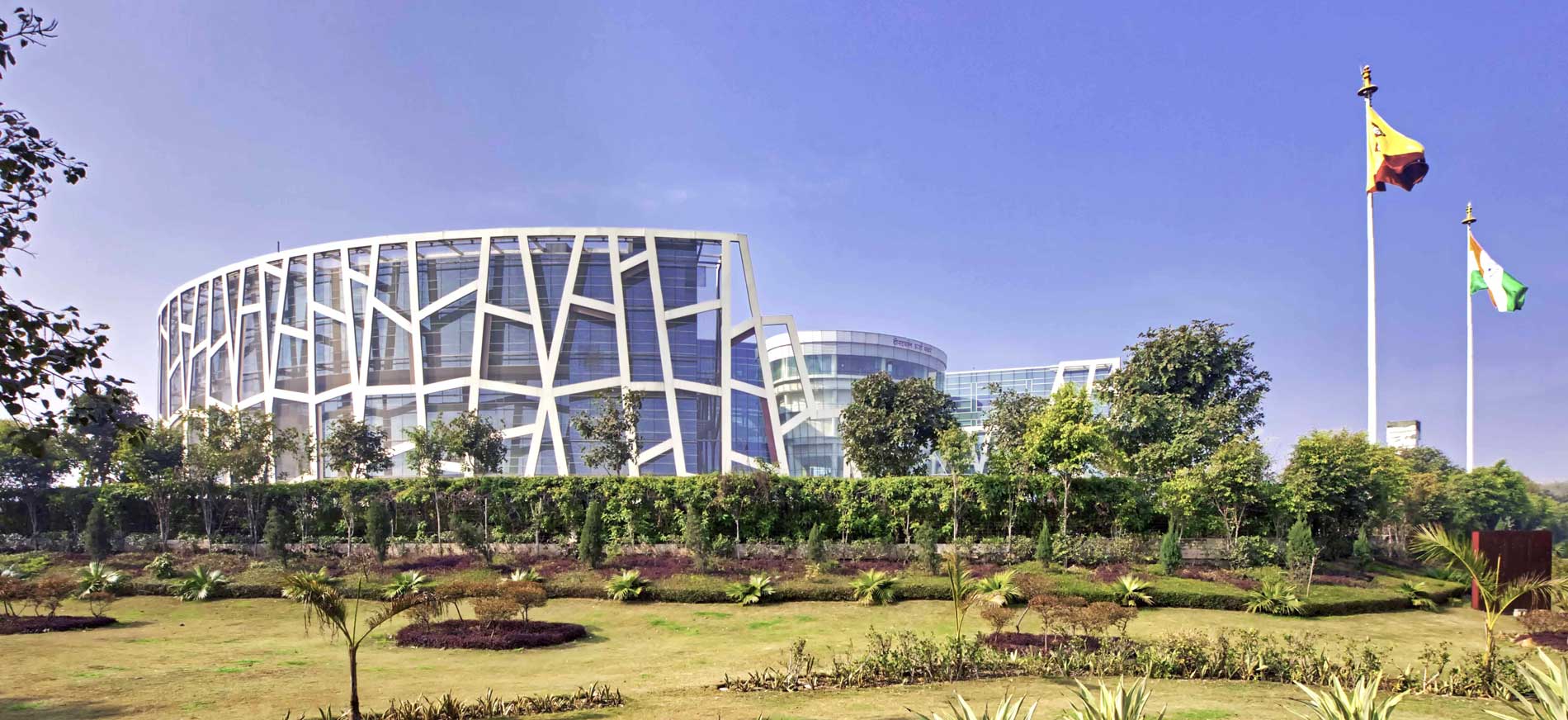
ONGC’s corporate headquarters in New Delhi redefines the architectural language traditionally associated with public-sector institutions in India. Conceived as a high-performance, people-centric workplace, the circular campus is a LEED Platinum–rated green building that demonstrates how large institutional architecture can be both sustainable and spatially generous.
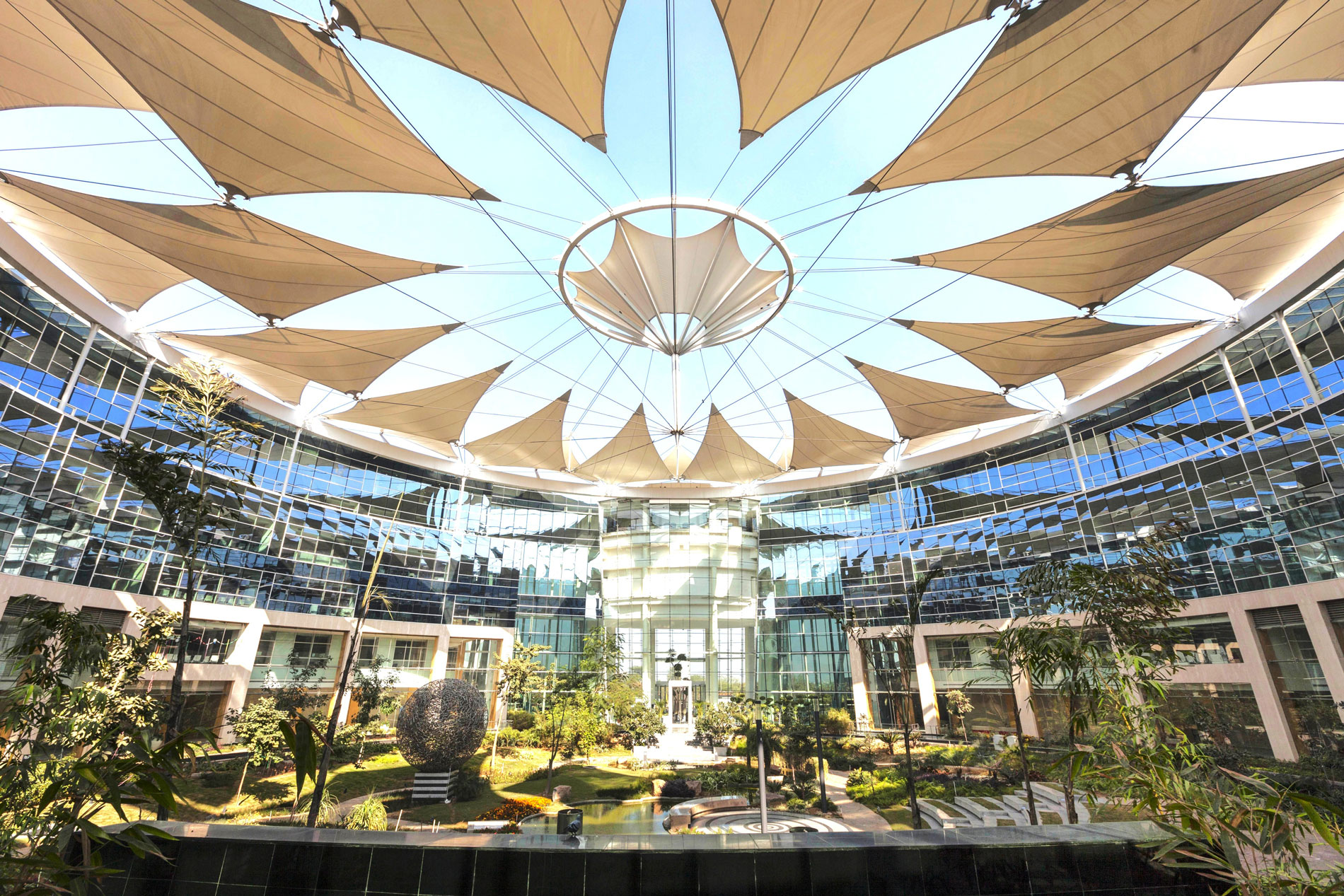
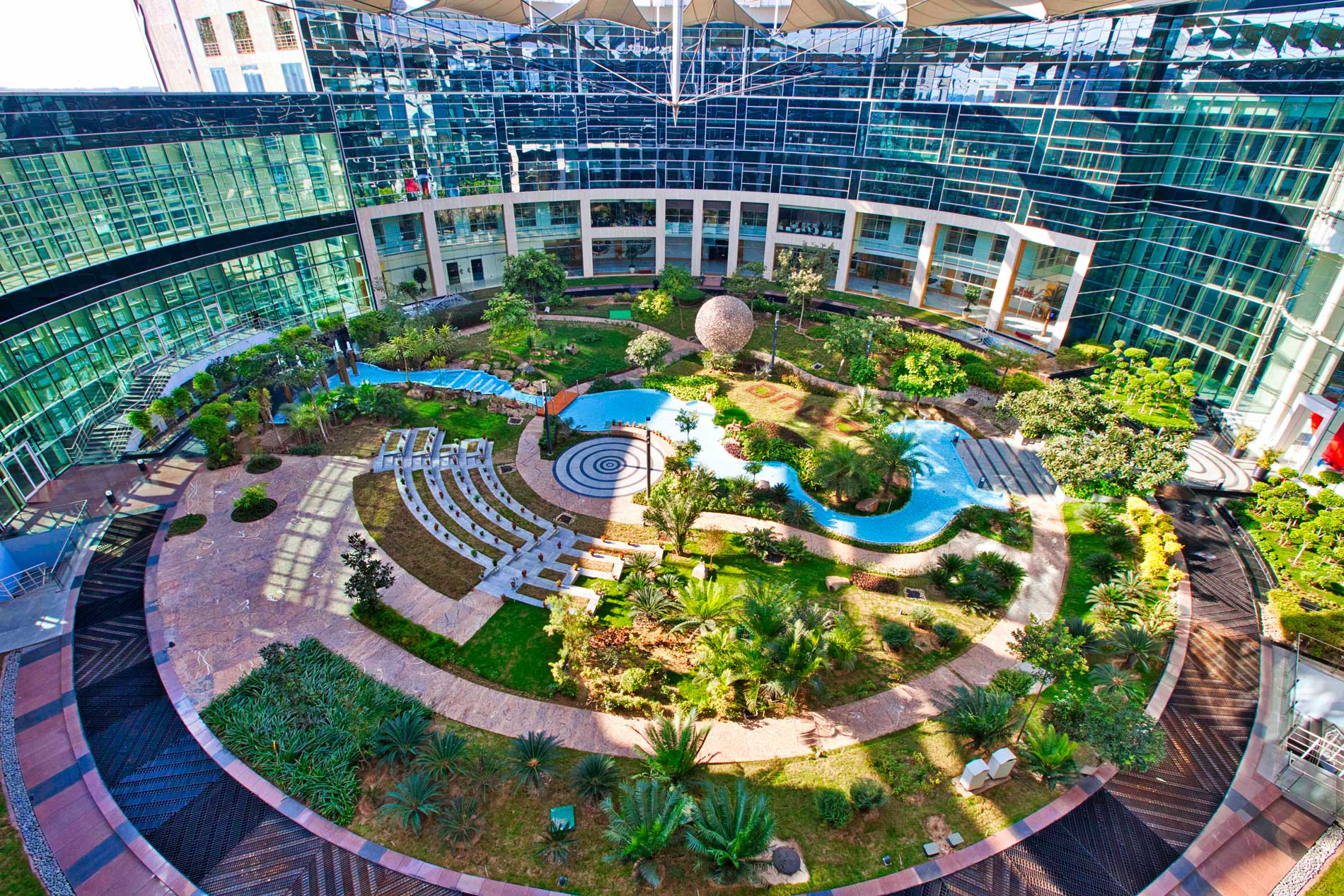
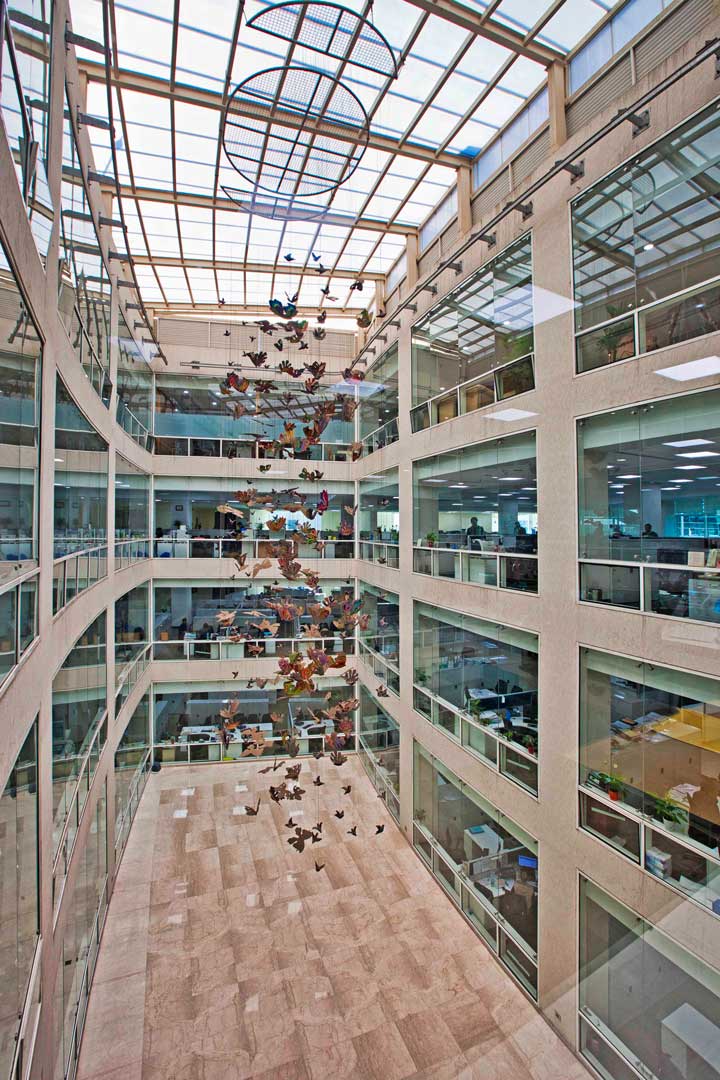
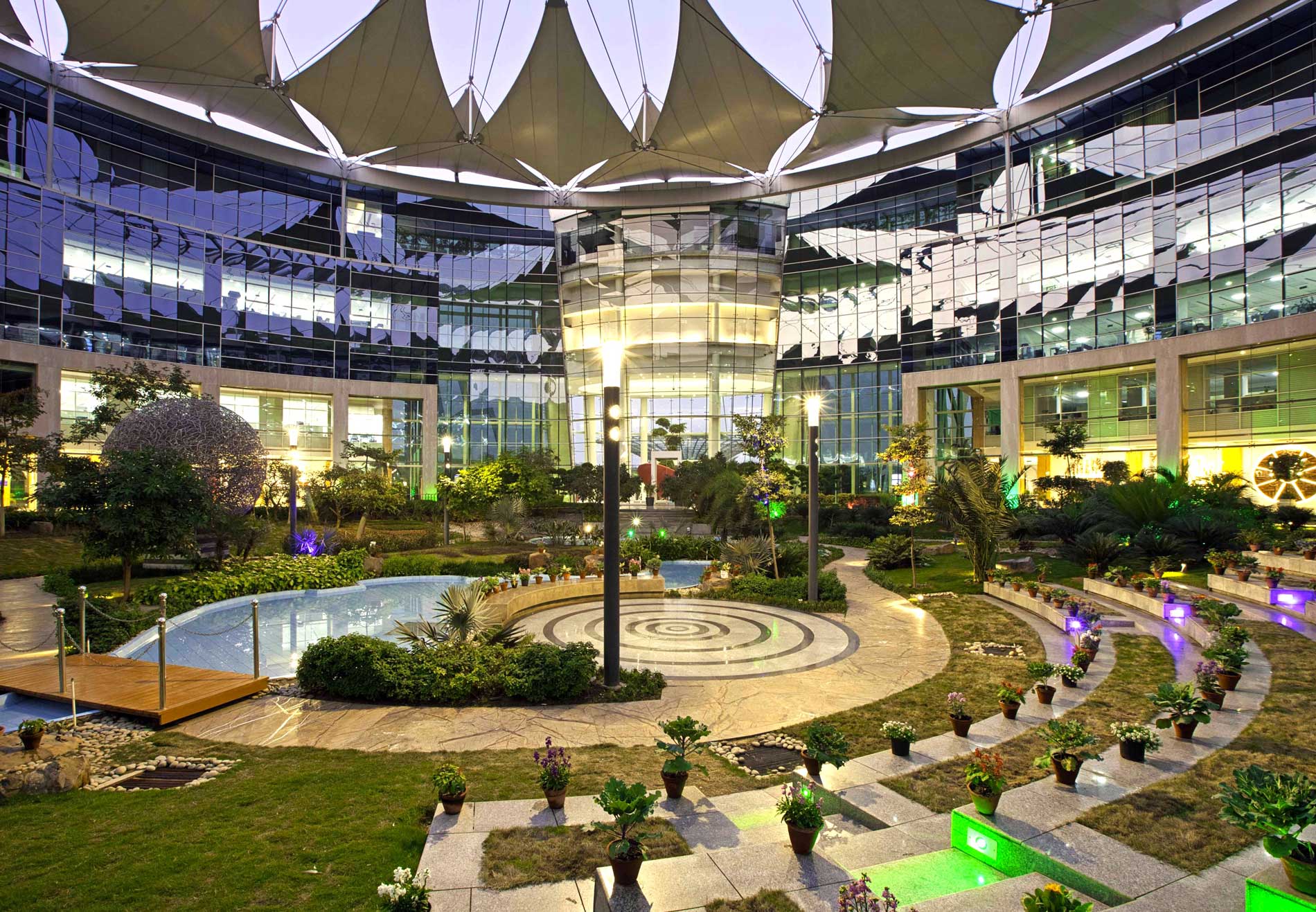
The project is organised into two east–west–oriented building blocks to optimise daylight and solar performance. Three internal courtyards within each block, along with a large central courtyard linking them, ensure that every workspace is located within 20 feet of natural light. The central courtyard—partially left unexcavated—supports mature planting and biodiversity, creating a shaded recreational heart for the campus. A tensile fabric roof spans this space, allowing diffused daylight while maintaining thermal comfort.
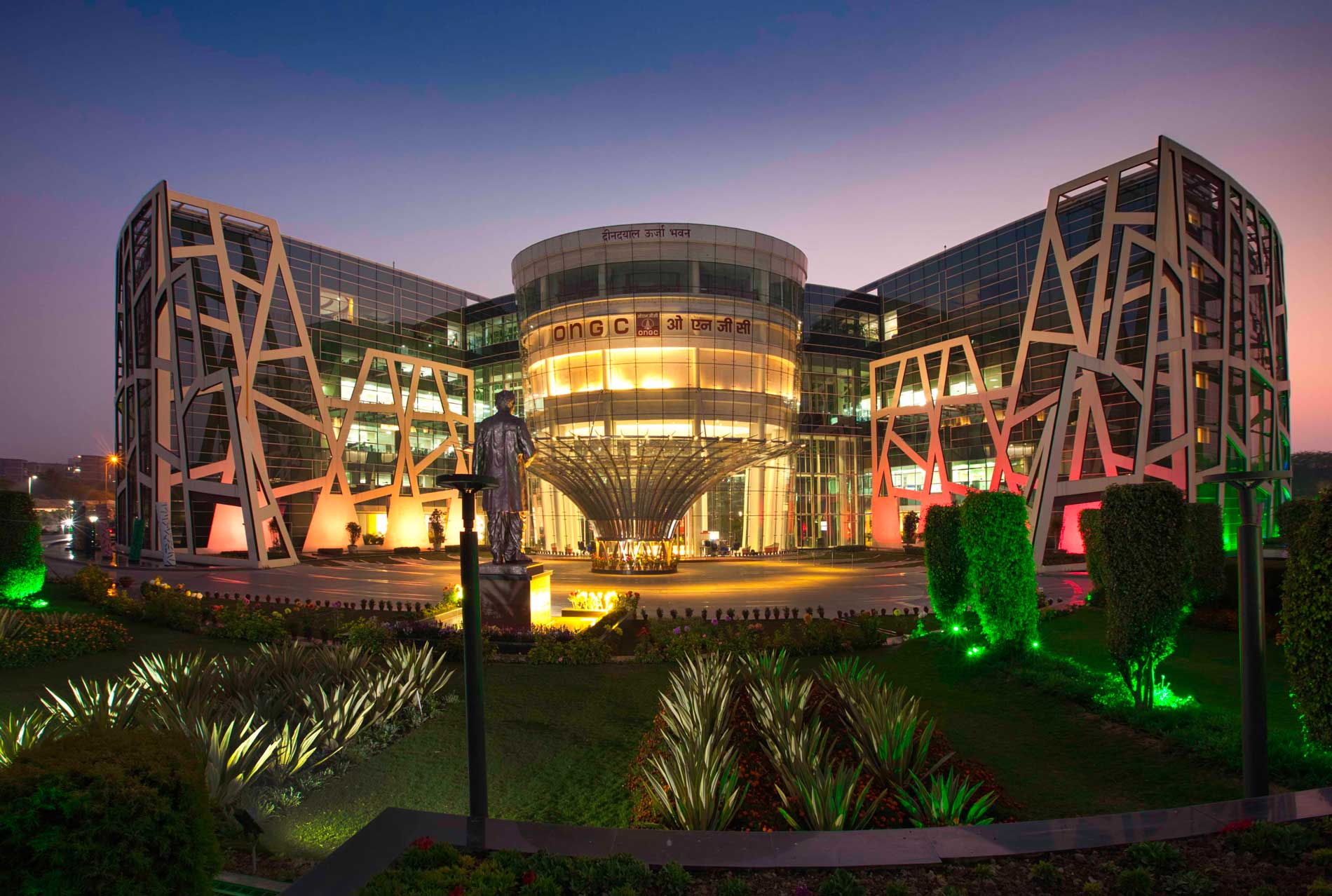
The building envelope employs a double-skin façade, with an inner glass curtain wall and an outer stainless-steel mesh structured as an irregular shading grid. This layered system reduces heat gain while maintaining visual permeability. Sustainability is further reinforced through rooftop solar panels supplying approximately 5% of the building’s energy demand, and an earth–air tunnel cooling system that pre-cools air for the HVAC system, significantly lowering energy loads.
A sculptural, cone-shaped entrance element anchors the campus, housing a public lobby at ground level and a boardroom above, marking the institutional threshold. Spanning approximately 1.05 million sq ft, the complex accommodates 1,650 employees, includes two basement levels with parking for 1,400 vehicles, and is fully barrier-free. ONGC is a contemporary symbol of India’s evolving public architecture—efficient, inclusive, and globally benchmarked in environmental performance.