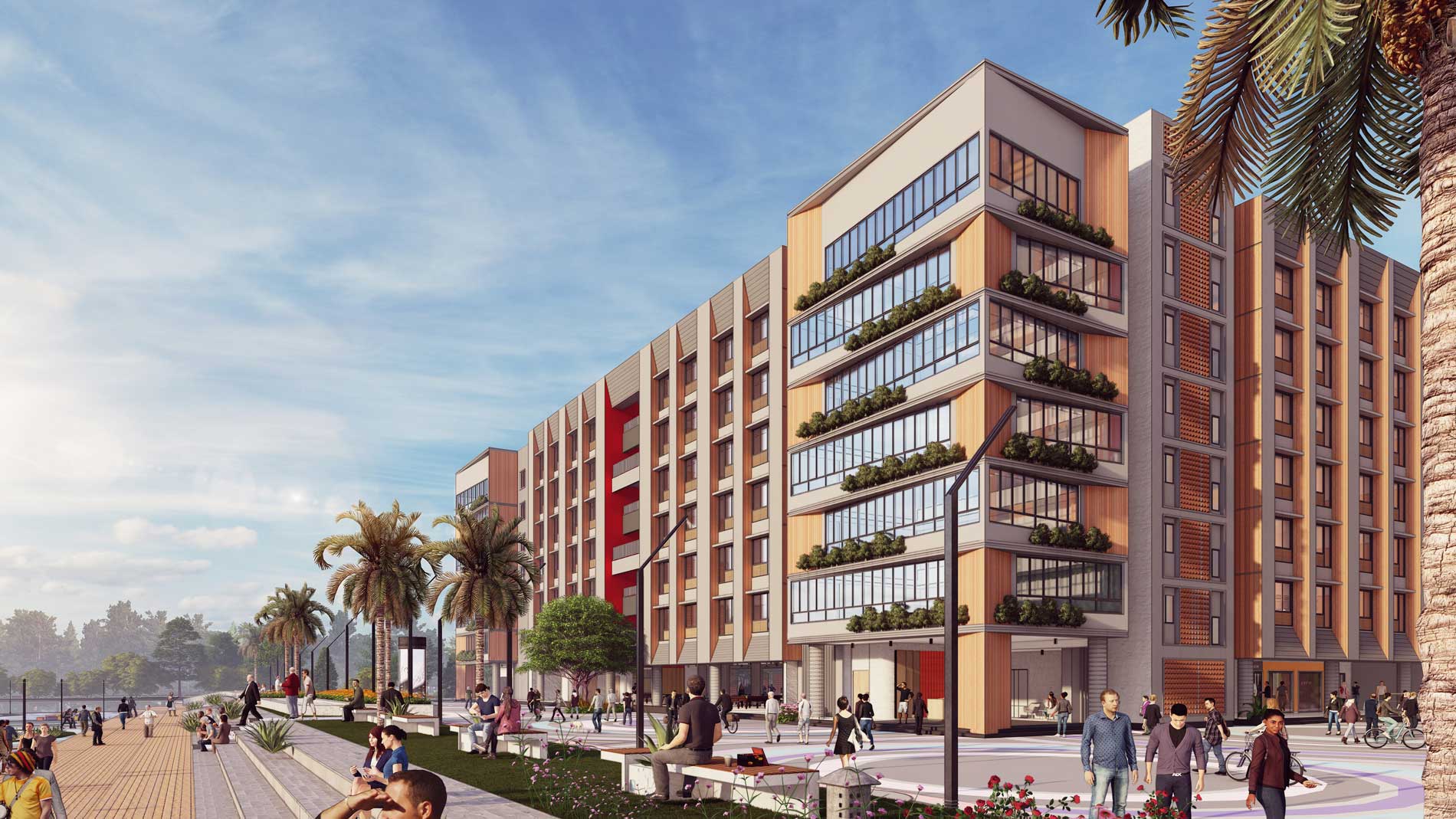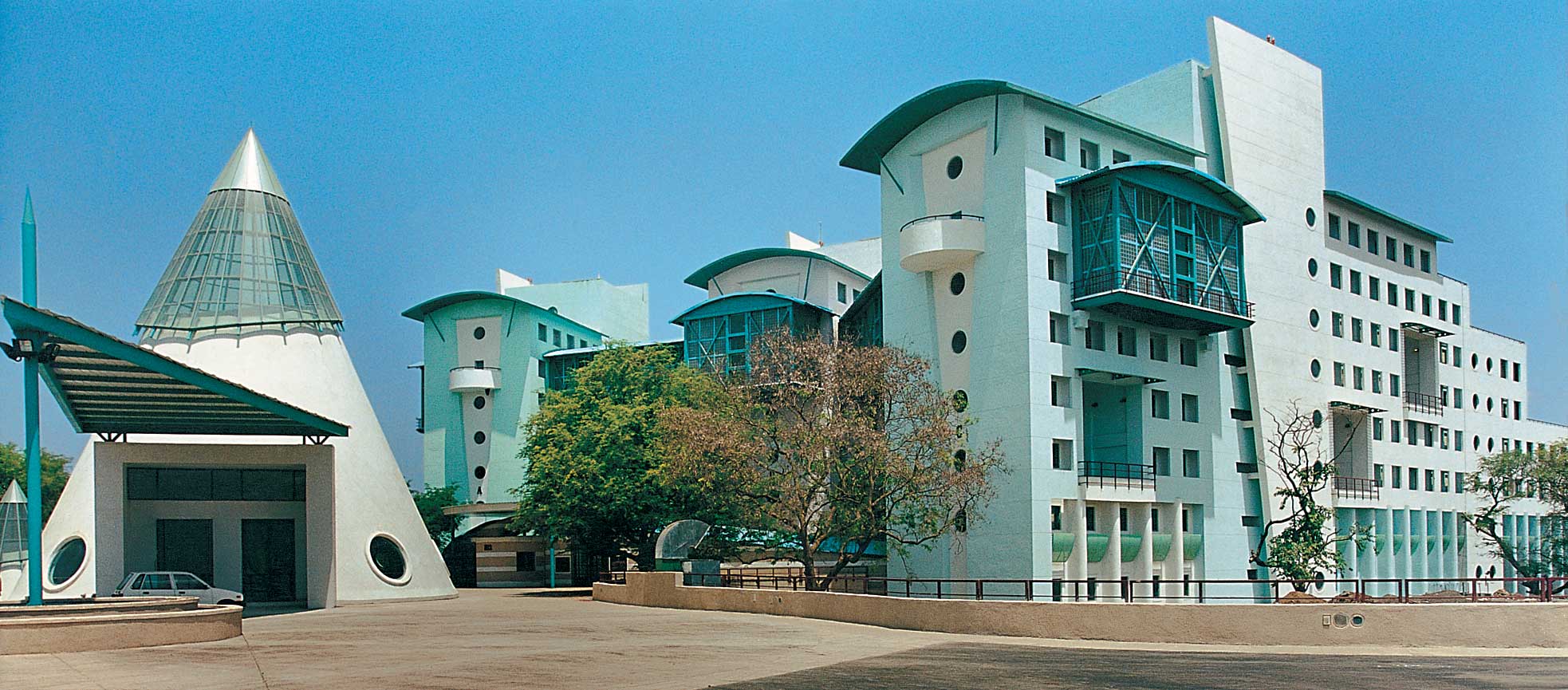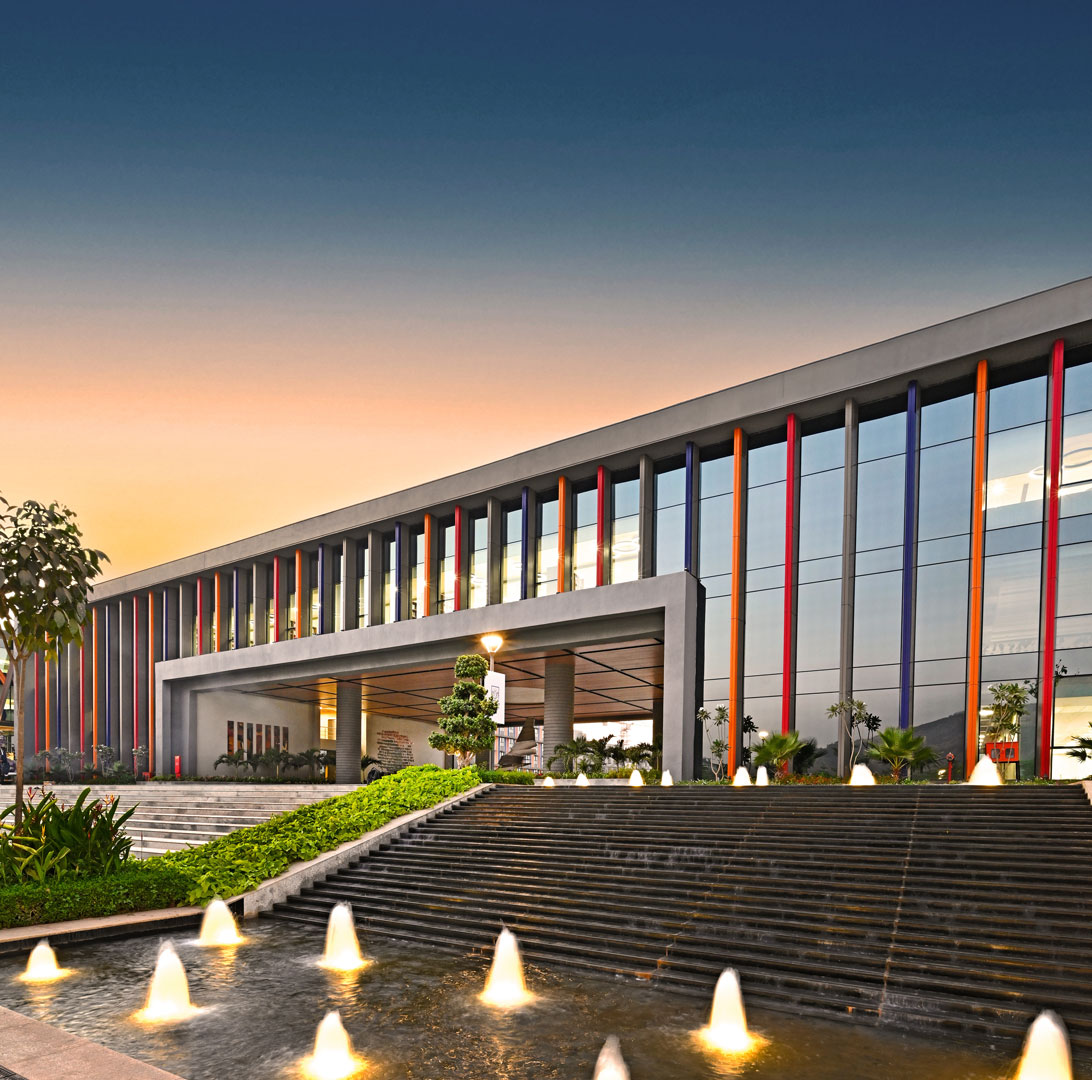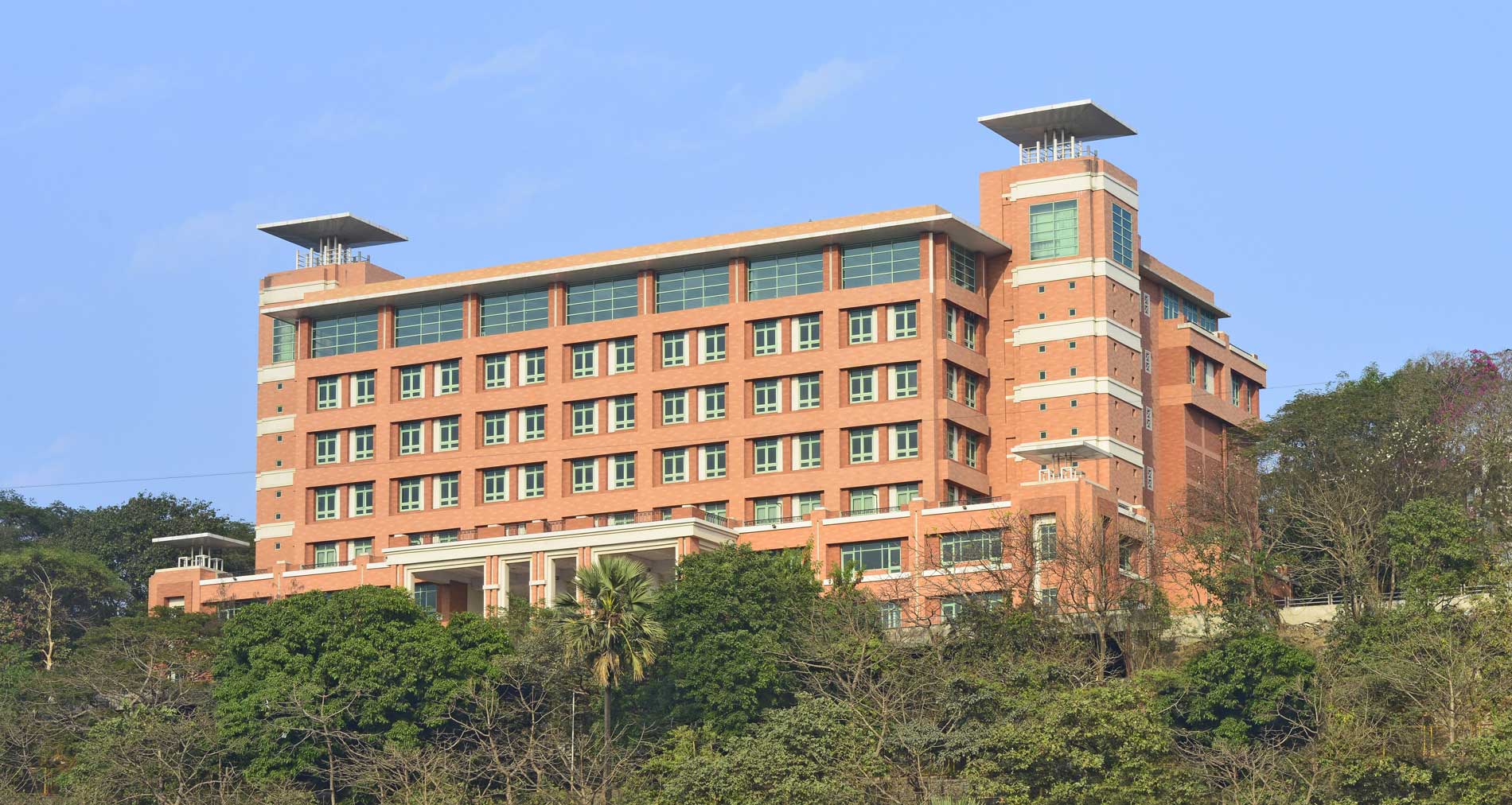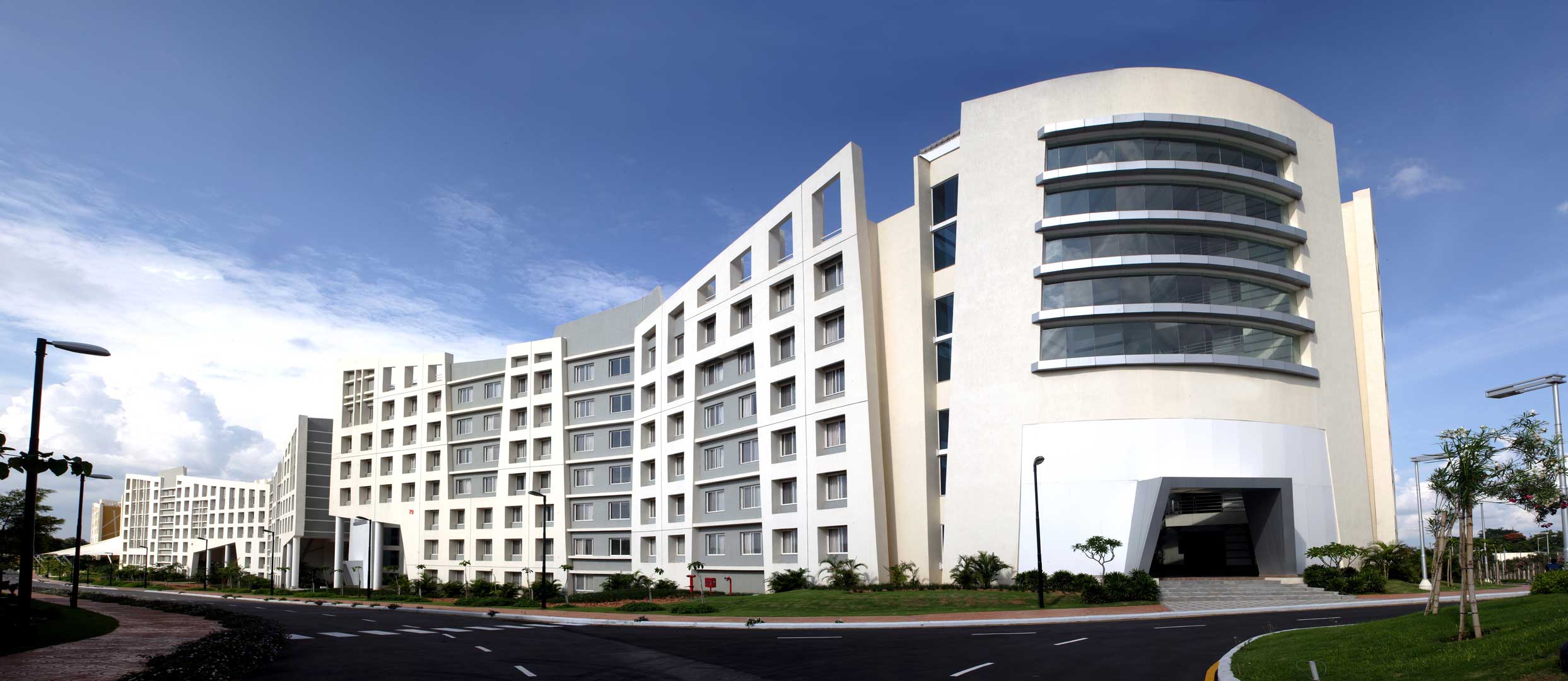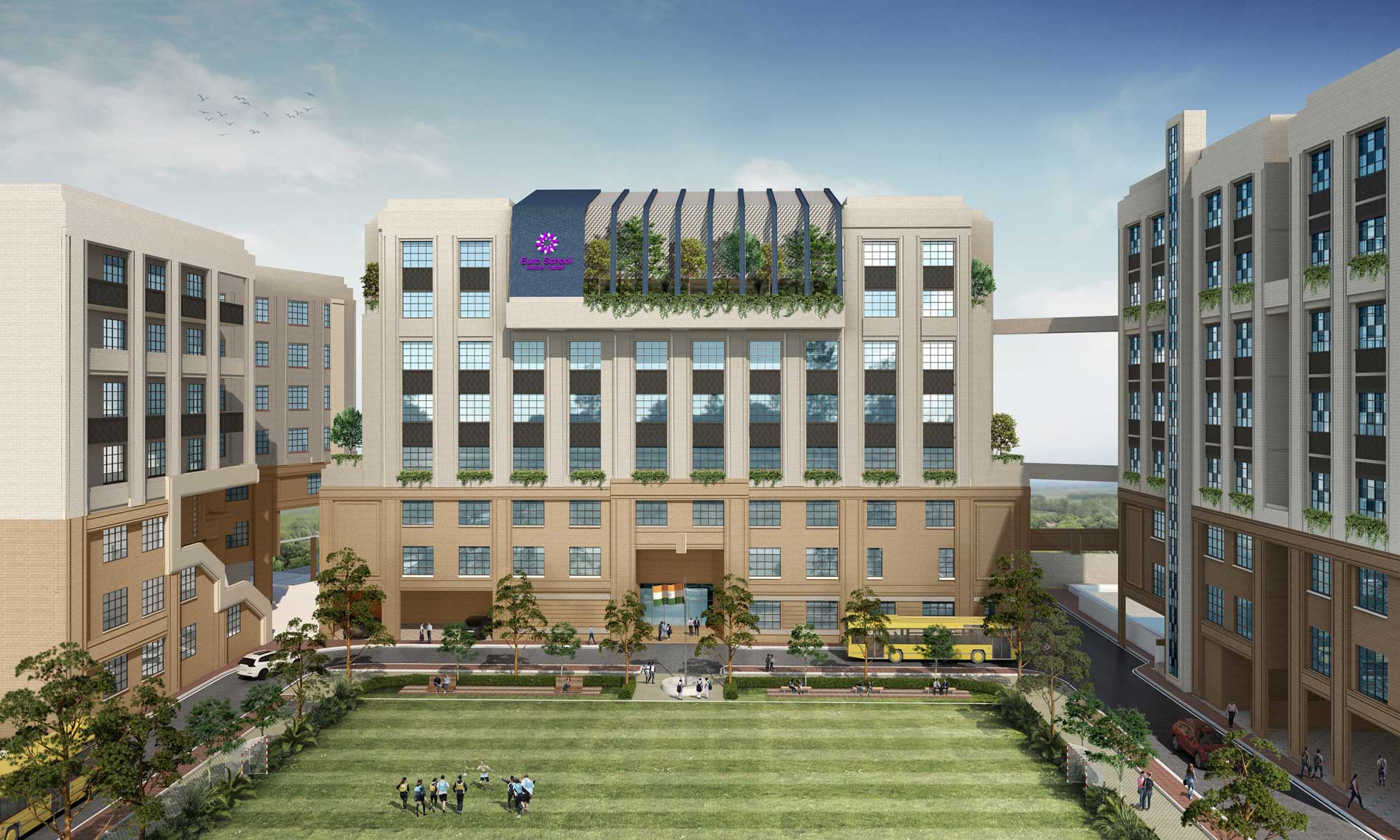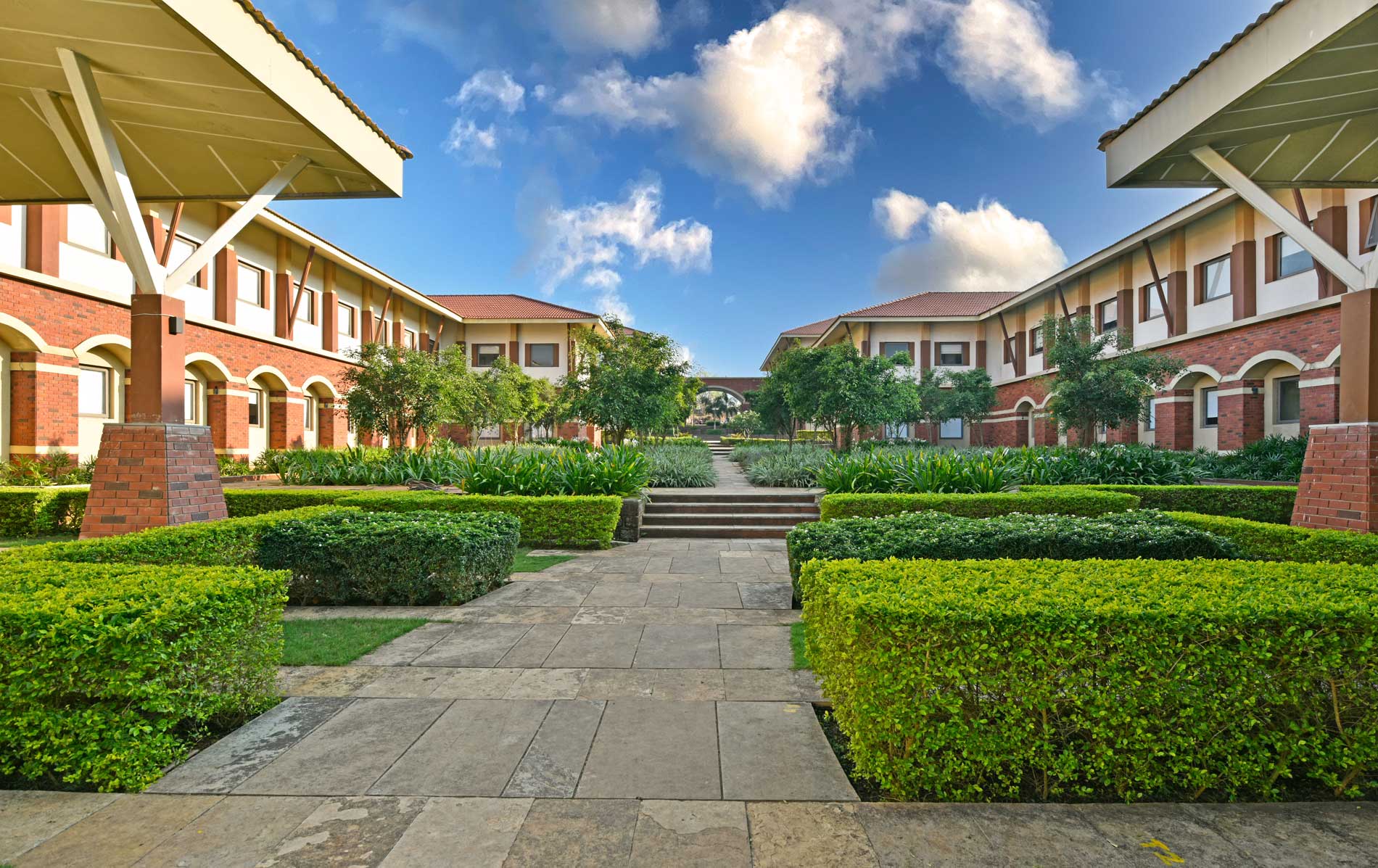

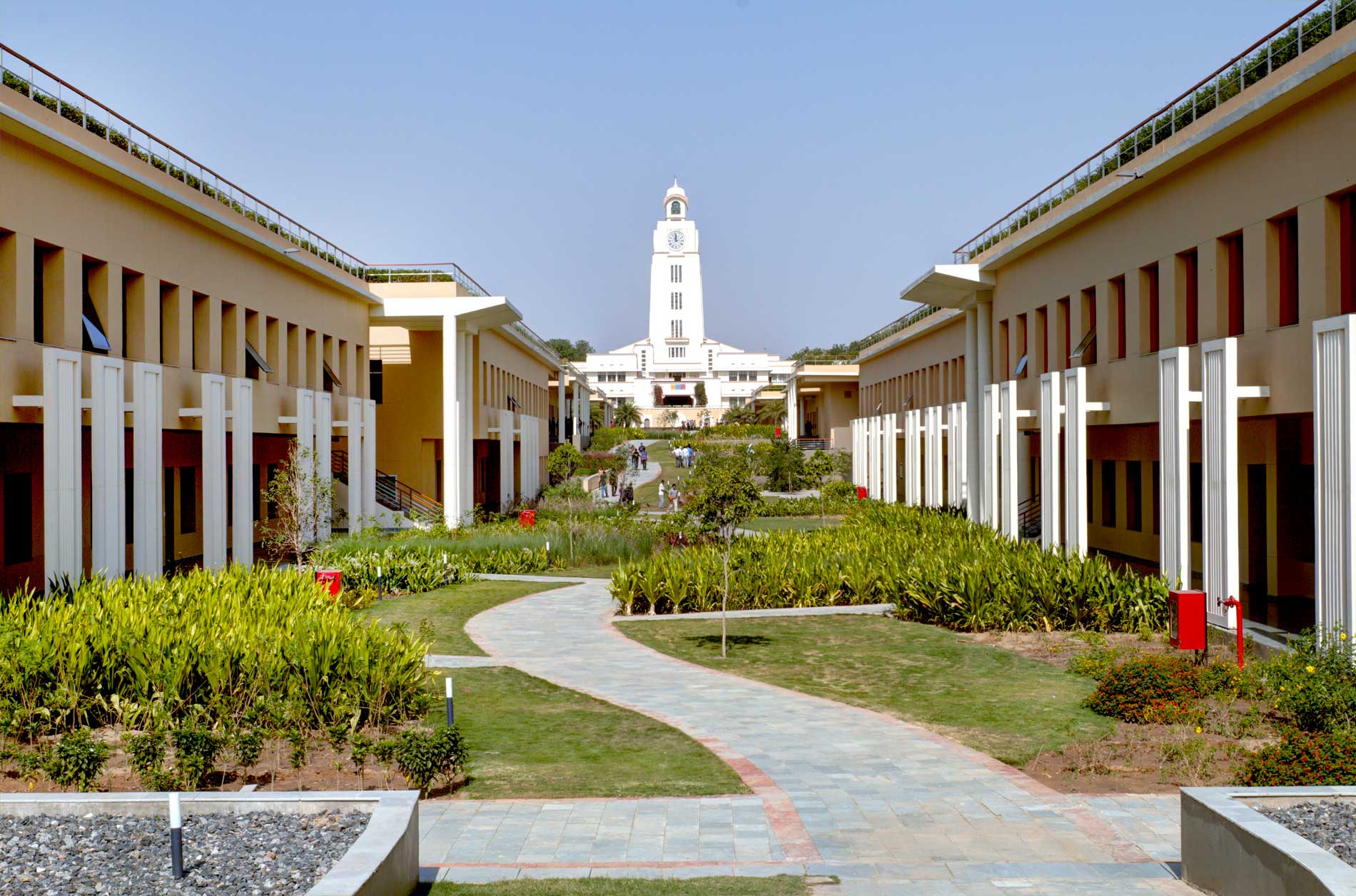
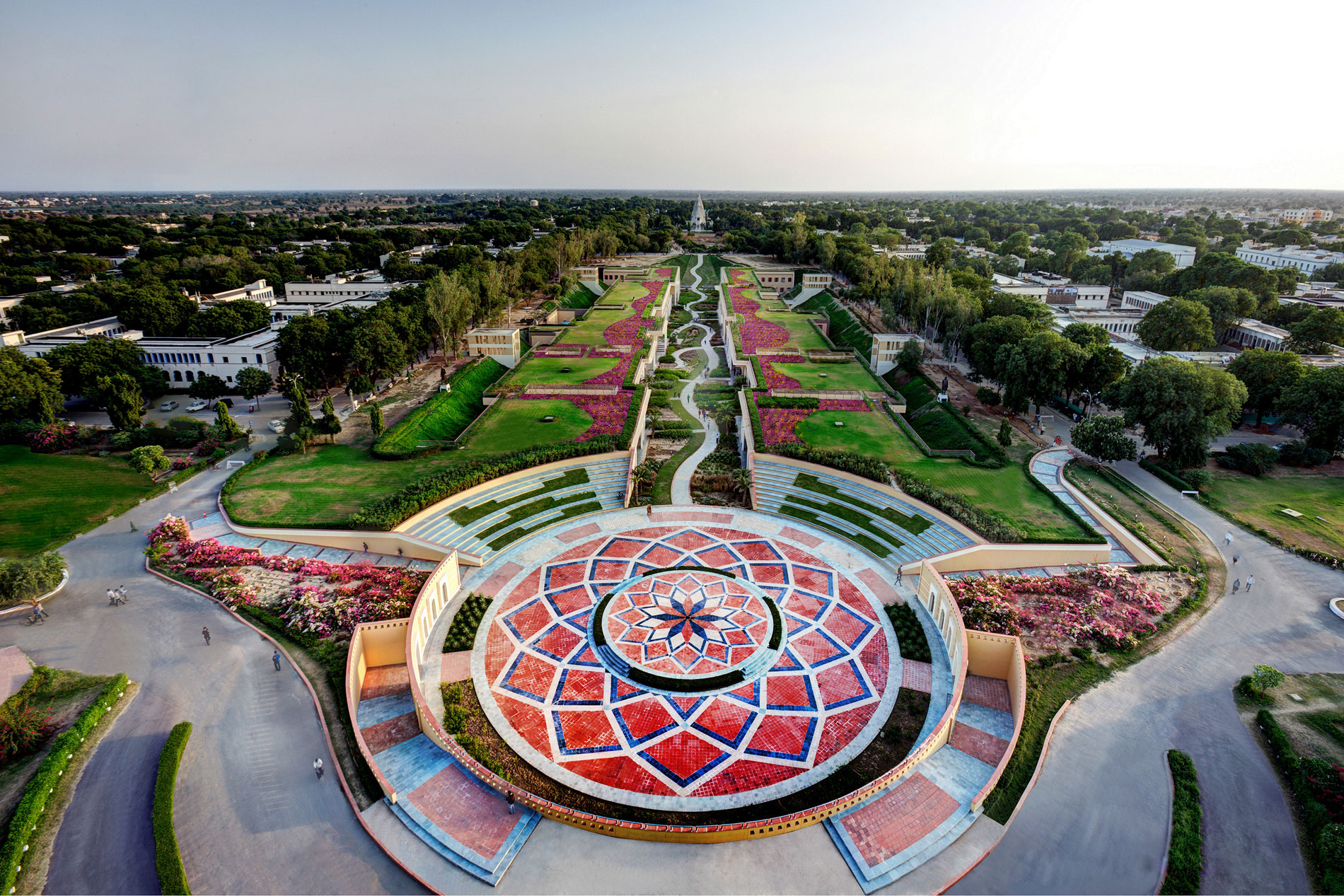
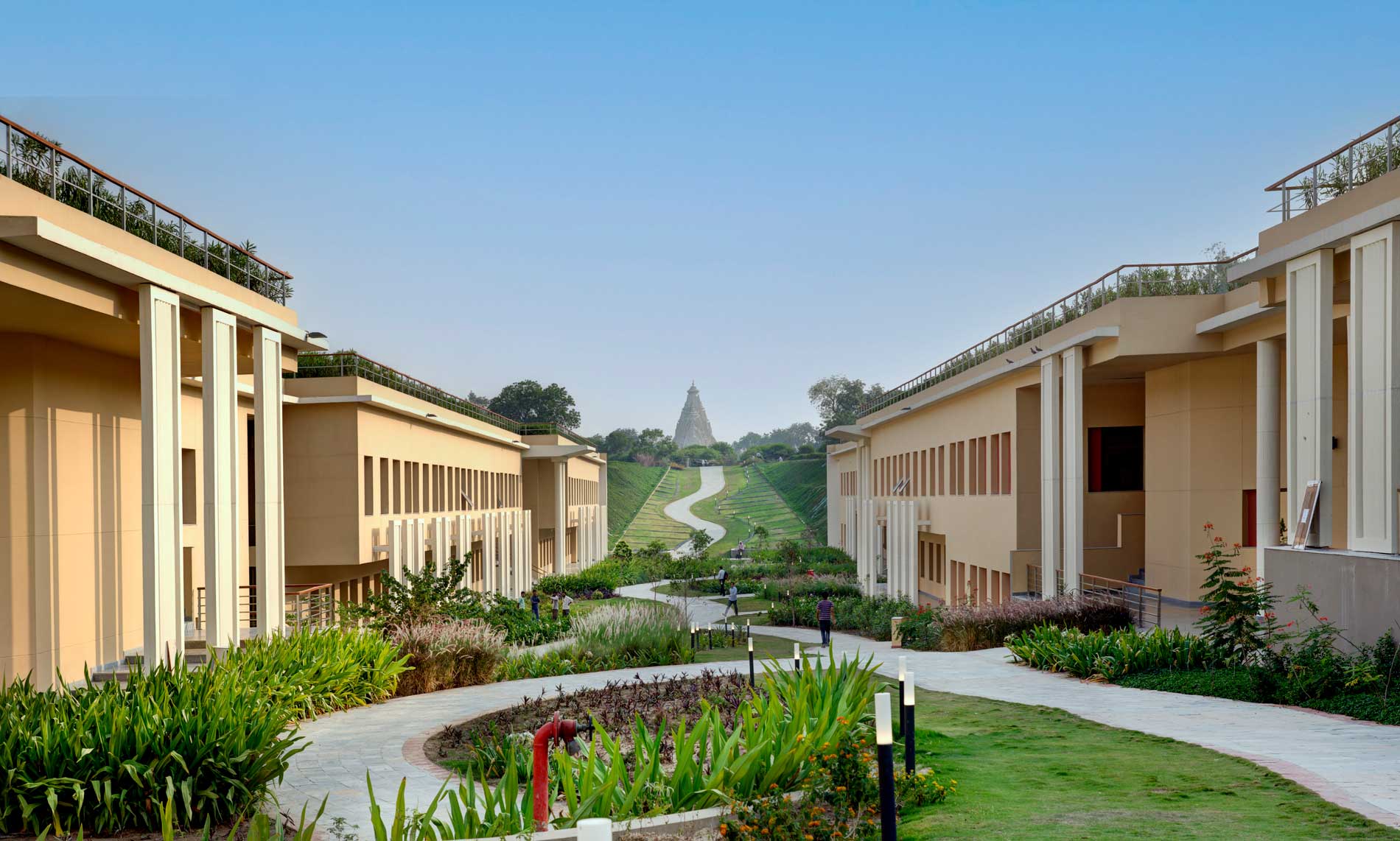
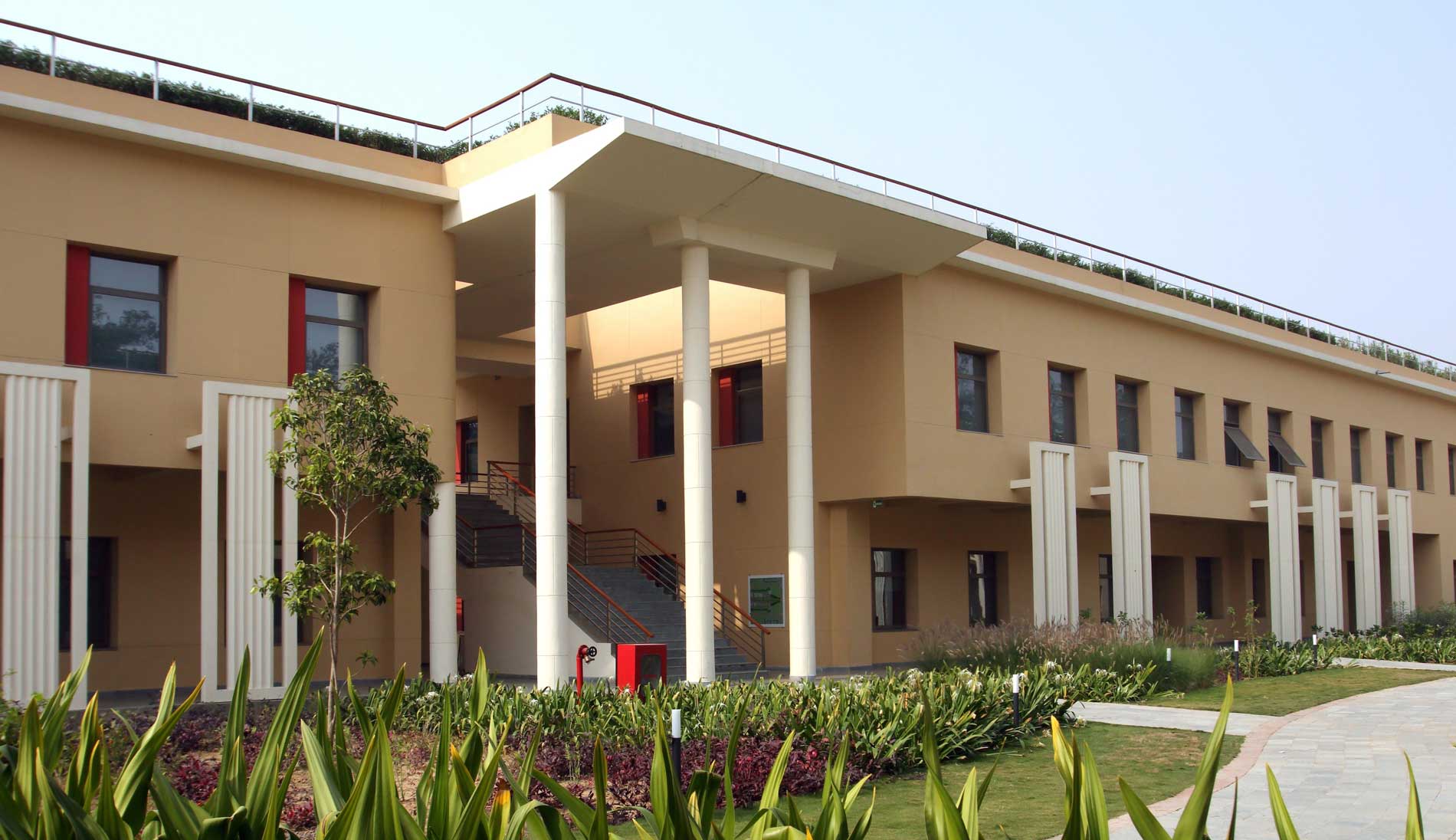
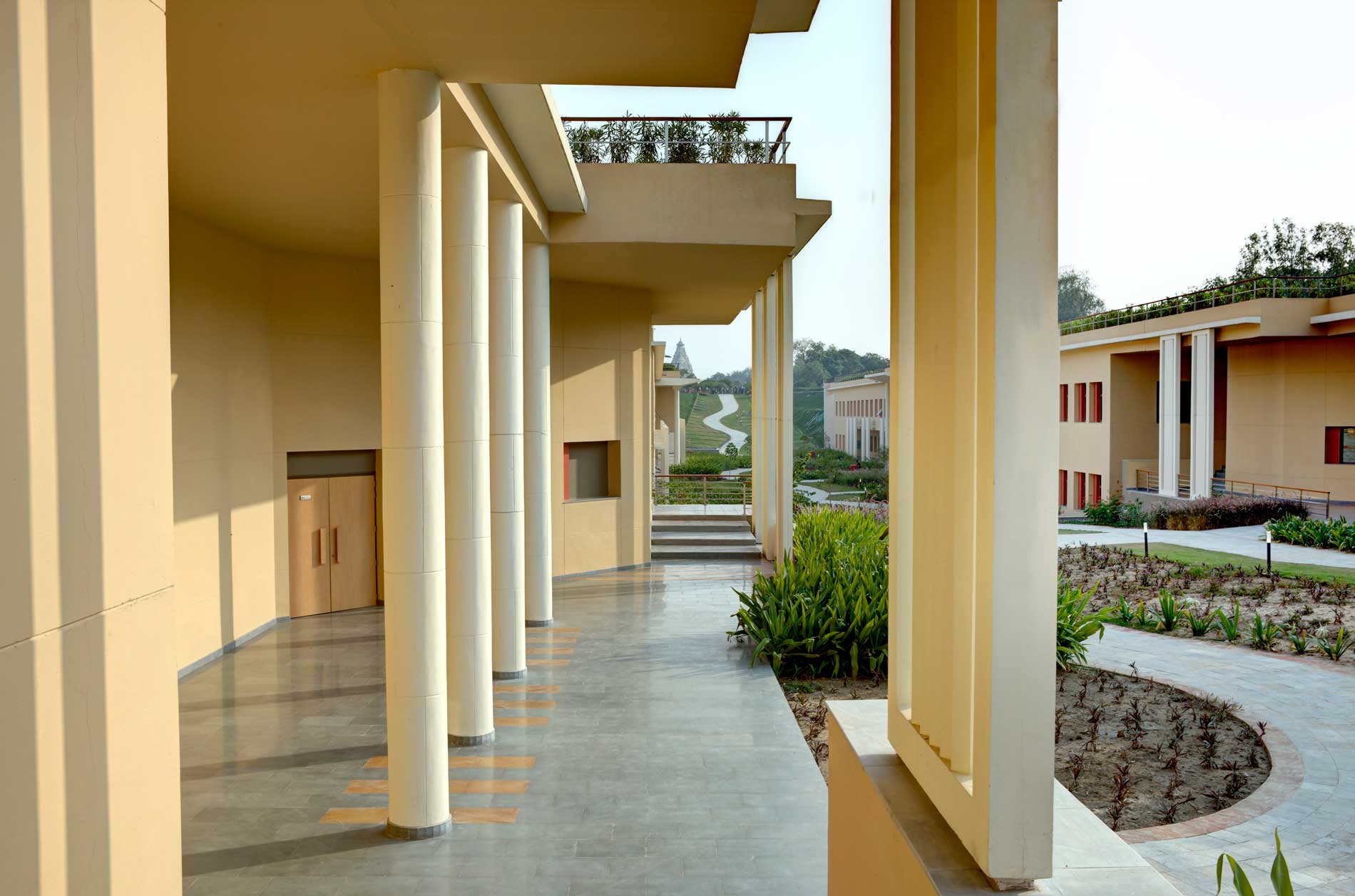
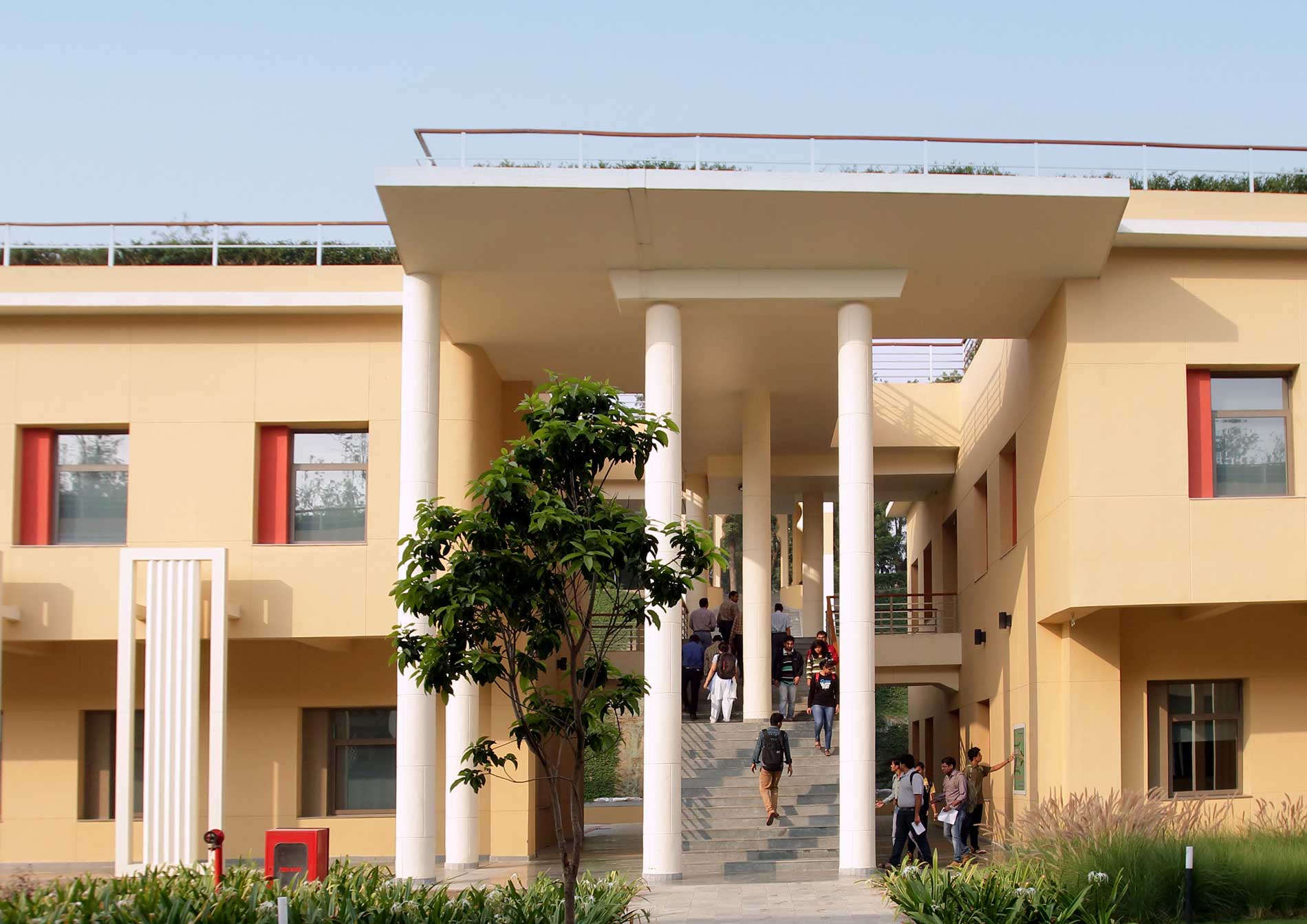
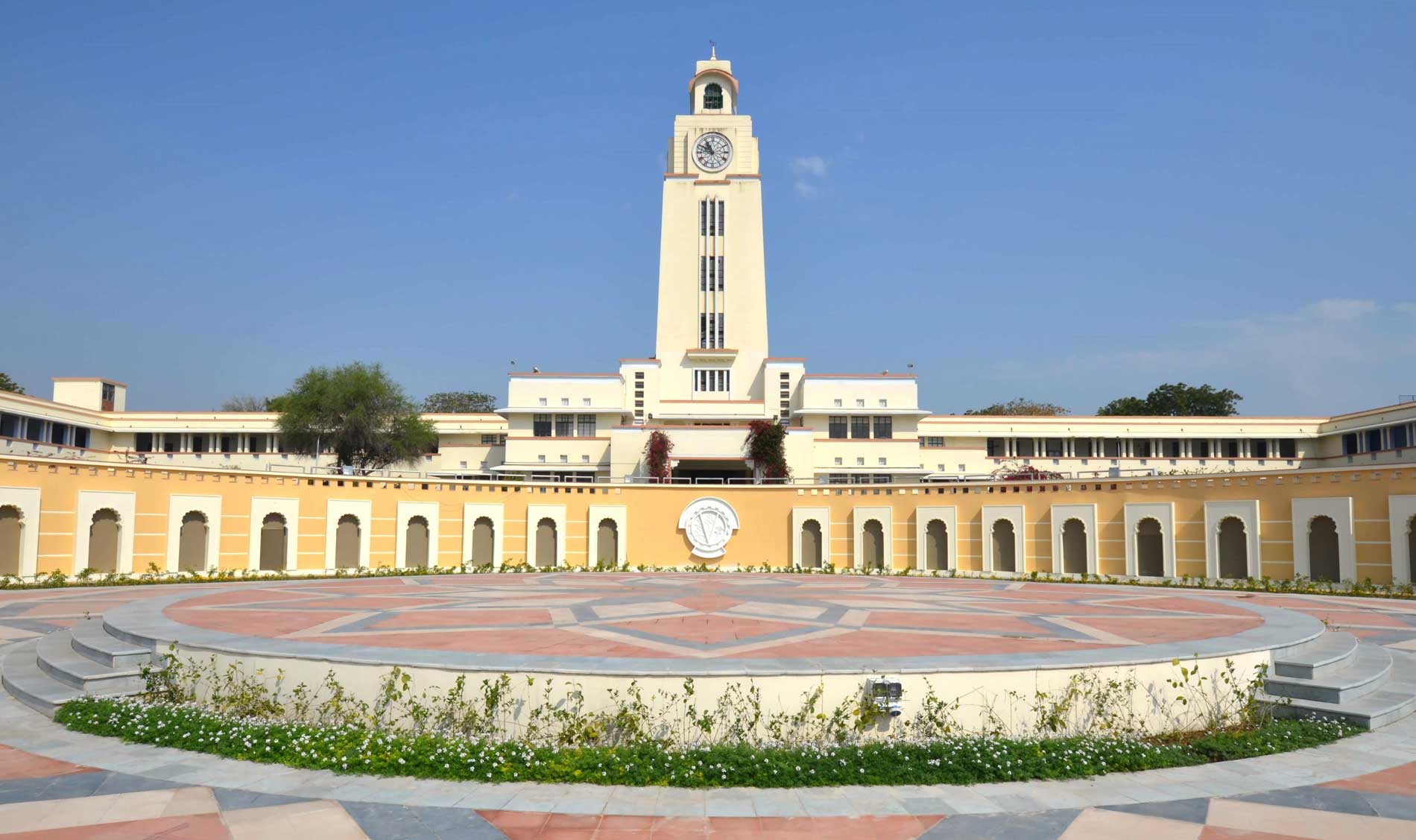
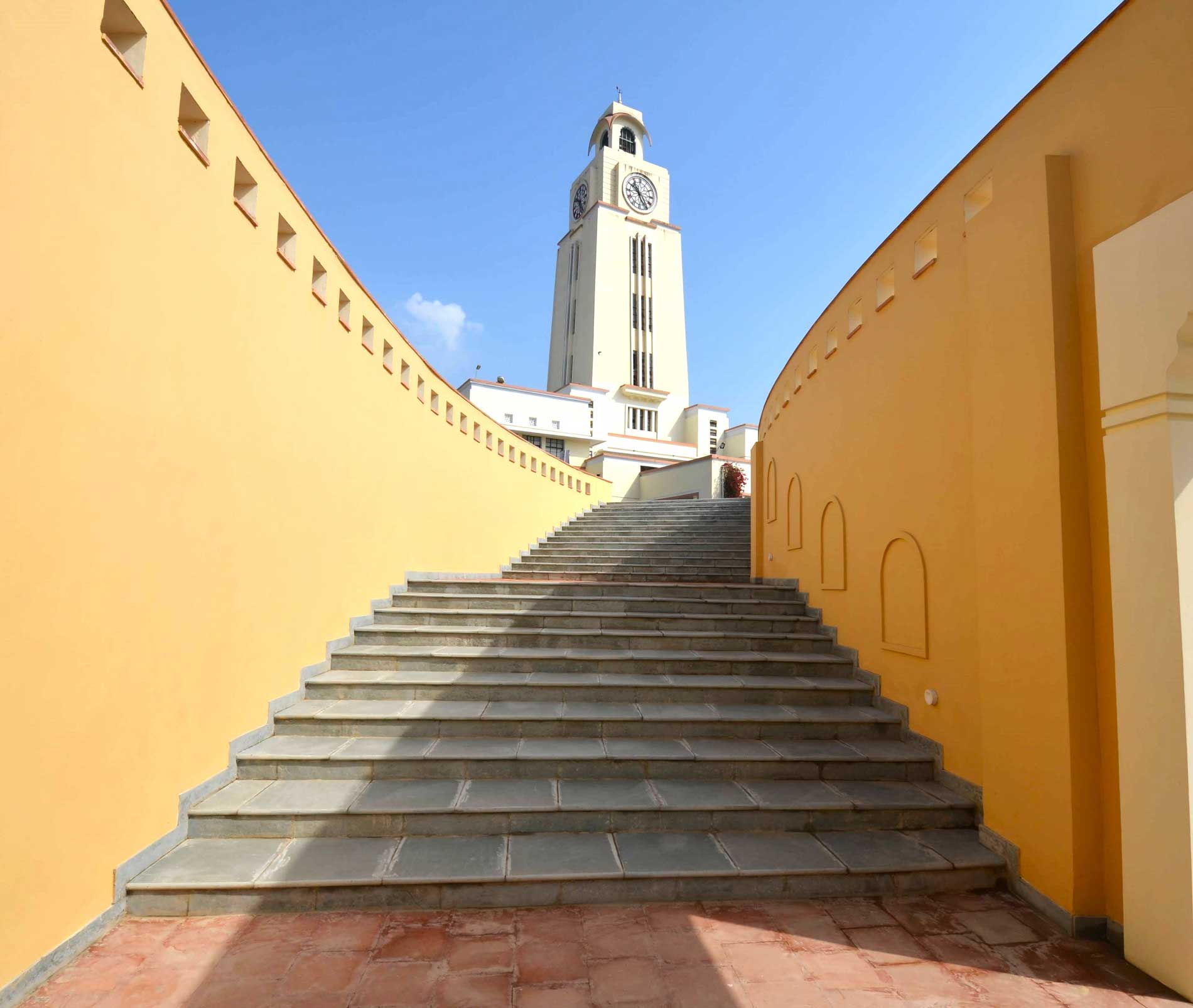
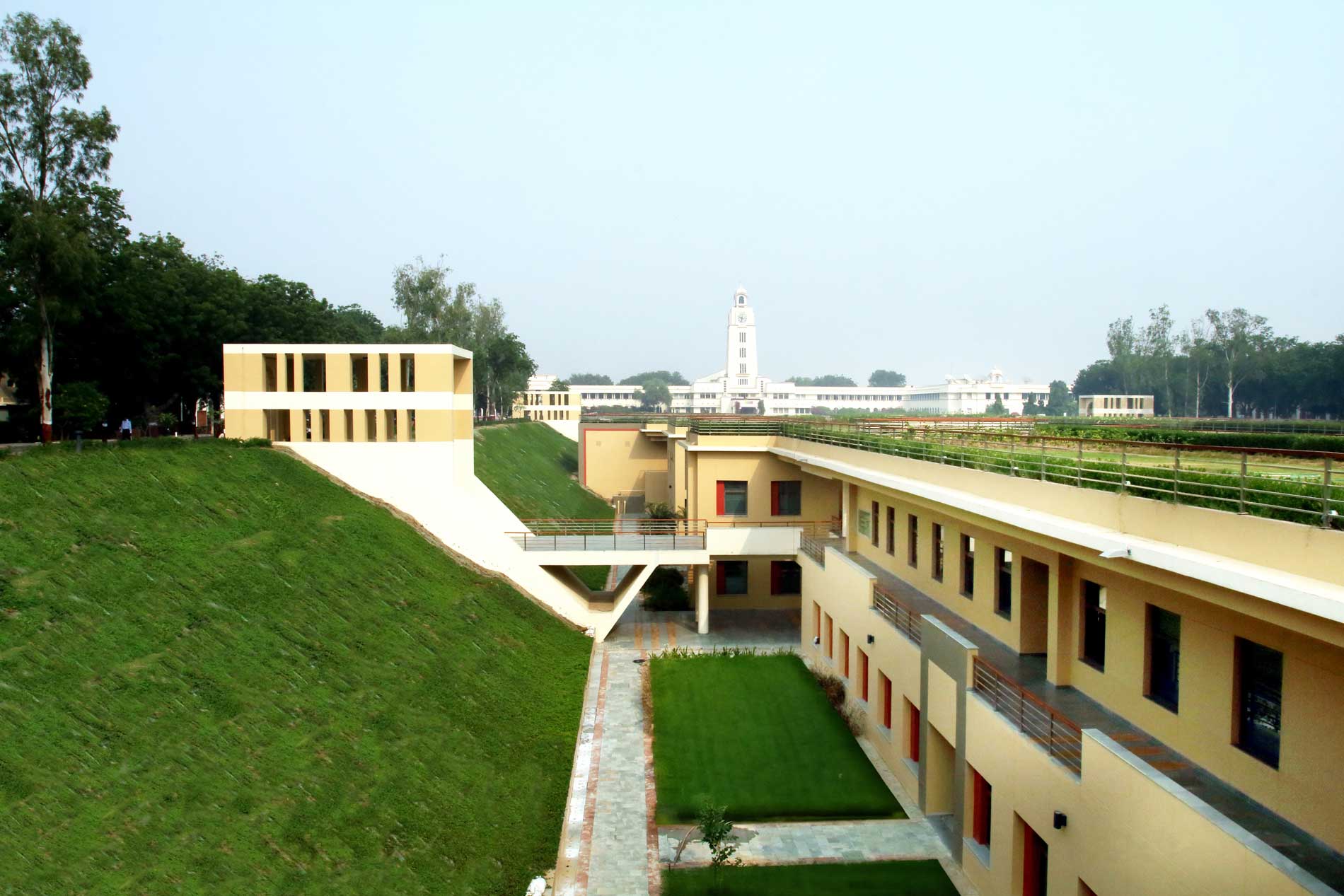
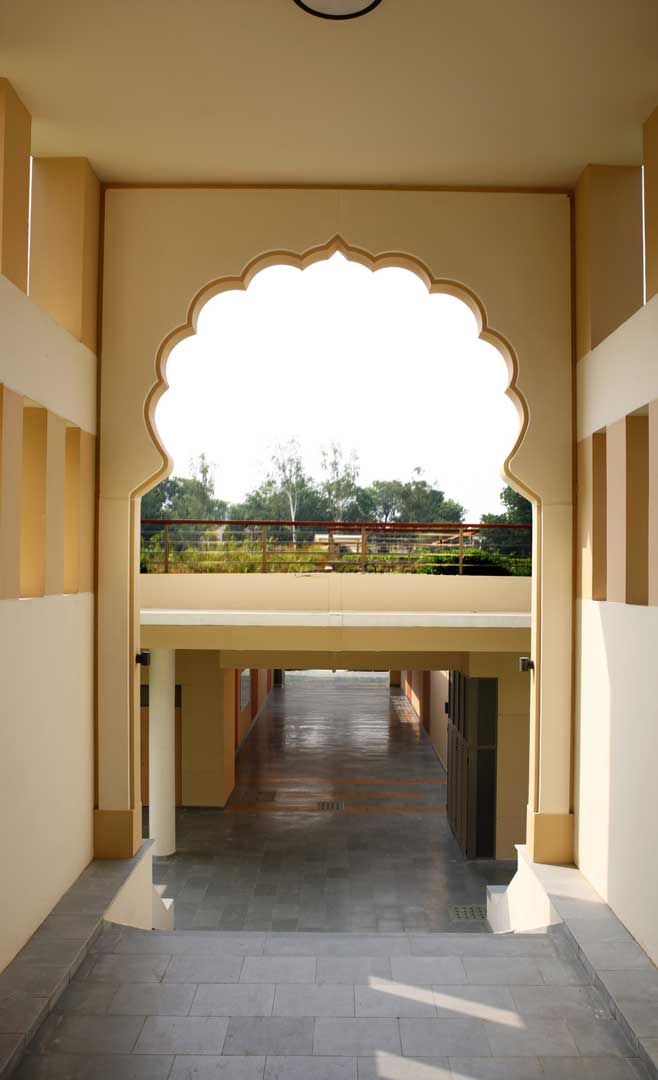
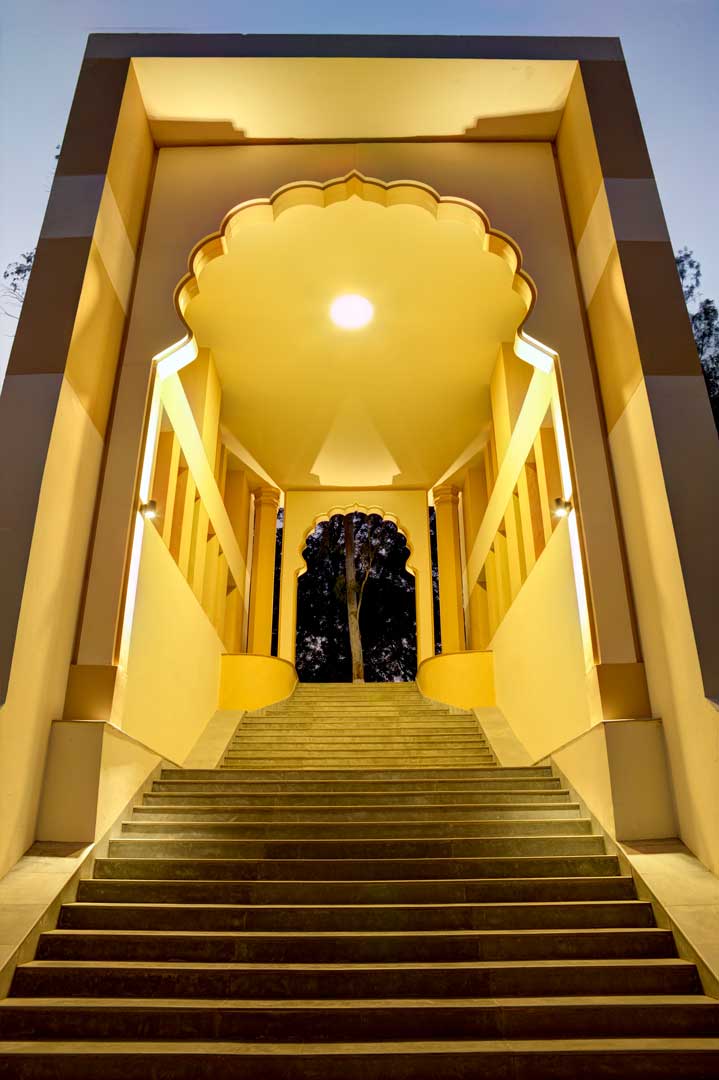
Set in a historic background, the Birla Institute of Technology and Science, Pilani, Rajasthan built in early 1900s is a centre for excellence and learning. The institute desired the modernisation of its infrastructure and desired to increase its student intake from 3500 to 5000 students while also modernising all its existing facilities. The first task was the construction of the New Academic Block (NAB) at BITS Pilani which has been envisioned and designed as a visual link between the Grand Old Clock Tower that sits atop the existing Academic Block on the north end of the campus and the Saraswati Mandir that adorns the south end forming this important visual axis. In between these 2 important Pilani landmarks lay a recreational ground admeasuring an area of almost 80 - 100,000 sq mtr - this was the only large parcel of land available for any significant construction of academic space. The approach adopted was to deliberately place the building in a subterranean way so as not to disturb this important visual axis that has successfully existed between Clock Tower and the Mandir for more than 50 years. The form emerged organically from the ground and new interlocking spaces were created with a central winding pathway leading from the Clock Tower to the Mandir. The terrace has large skylights at irregular intervals to provide natural sunlight as well as break the monotony at the ground level. A grand Rotunda (50 mtr dia) was created, housing 1500 students for gatherings and forms a fusion between the traditional architecture of the Pilani Campus through a narrative of arches along the Clock Tower and contemporary seating with ramps along the new building. The only “above the ground” structures are four grand archways having Rajasthani style arches which are symbolic with the existing architecture of the campus leading down to the new contemporary building. The building is designed to LEED Gold Standards and has a 65,000 sq ft Green Roof having flora and fauna. The embankments created by excavation are greened with Wadelia creepers requiring less water and maintenance. The building houses academic space for over 2500 students and even today remains invisible above ground and needs to be discovered by a person visiting for the first time. Apart from the New Academic Block, we were also tasked with the renovation of 3500 student rooms, building of 1000 new ones; renovation and new construction of almost 250 faculty houses, student mess’, infrastructure development, etc. All the work was carried out keeping carefully in mind the harsh Pilani climate which varies from 0 to 50 degrees in winter and summer as well as keeping in mind the cultures, architecture and way of life here.
Loading projects…




For work enquiries info@hcontractor.com
For press enquiries exec@hcontractor.com
For careers see current listings

Architect Hafeez Contractor
1st floor, B-29, Sonawala Building
Nyaymurti G N Vaidya Road
Fort, Mumbai, Maharashtra – 400 001
(+91) 22 2266 1920
1st floor, B-29, Sonawala Building
Nyaymurti G N Vaidya Road
Fort, Mumbai, Maharashtra – 400 001
(+91) 22 2266 1920