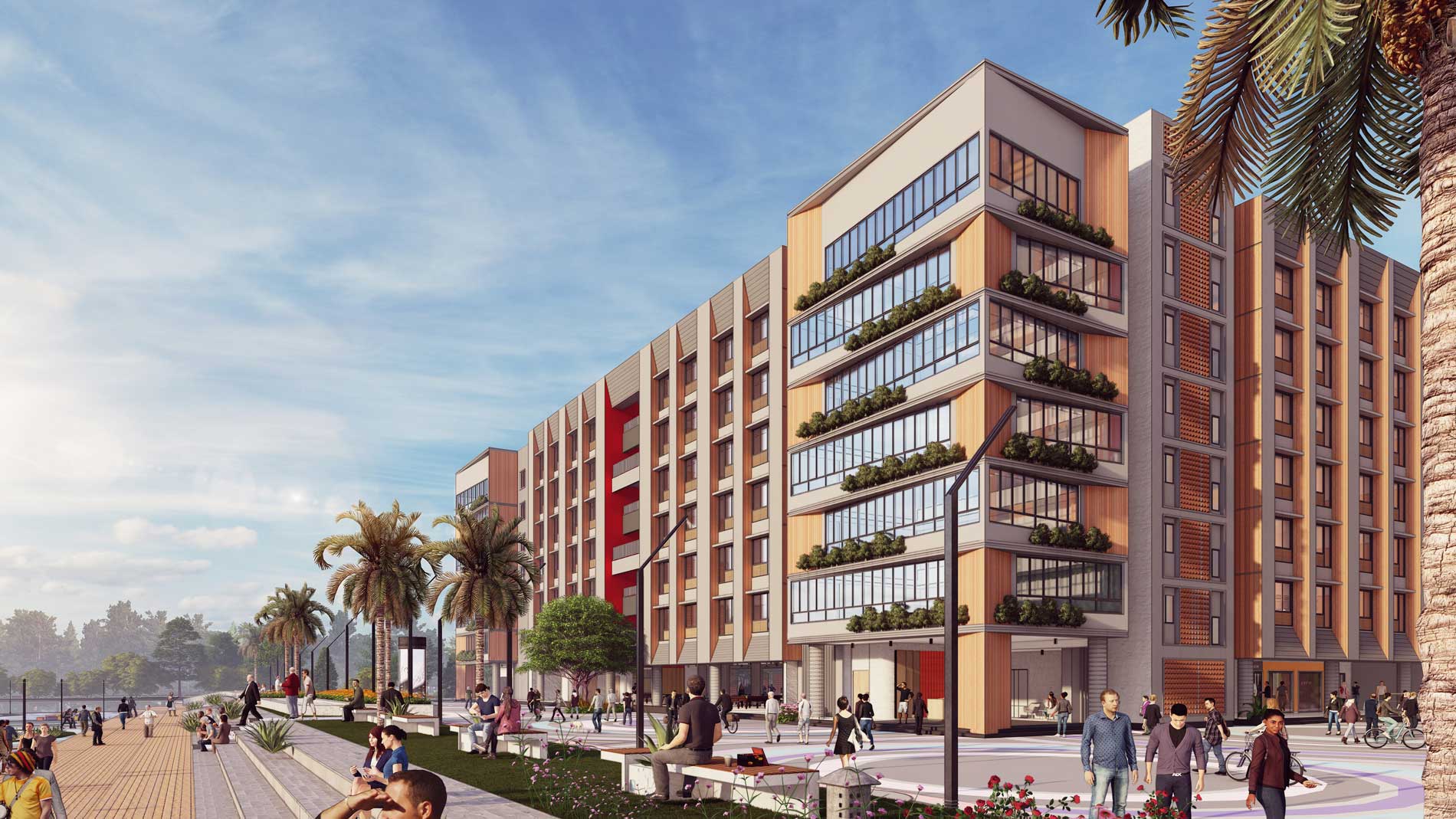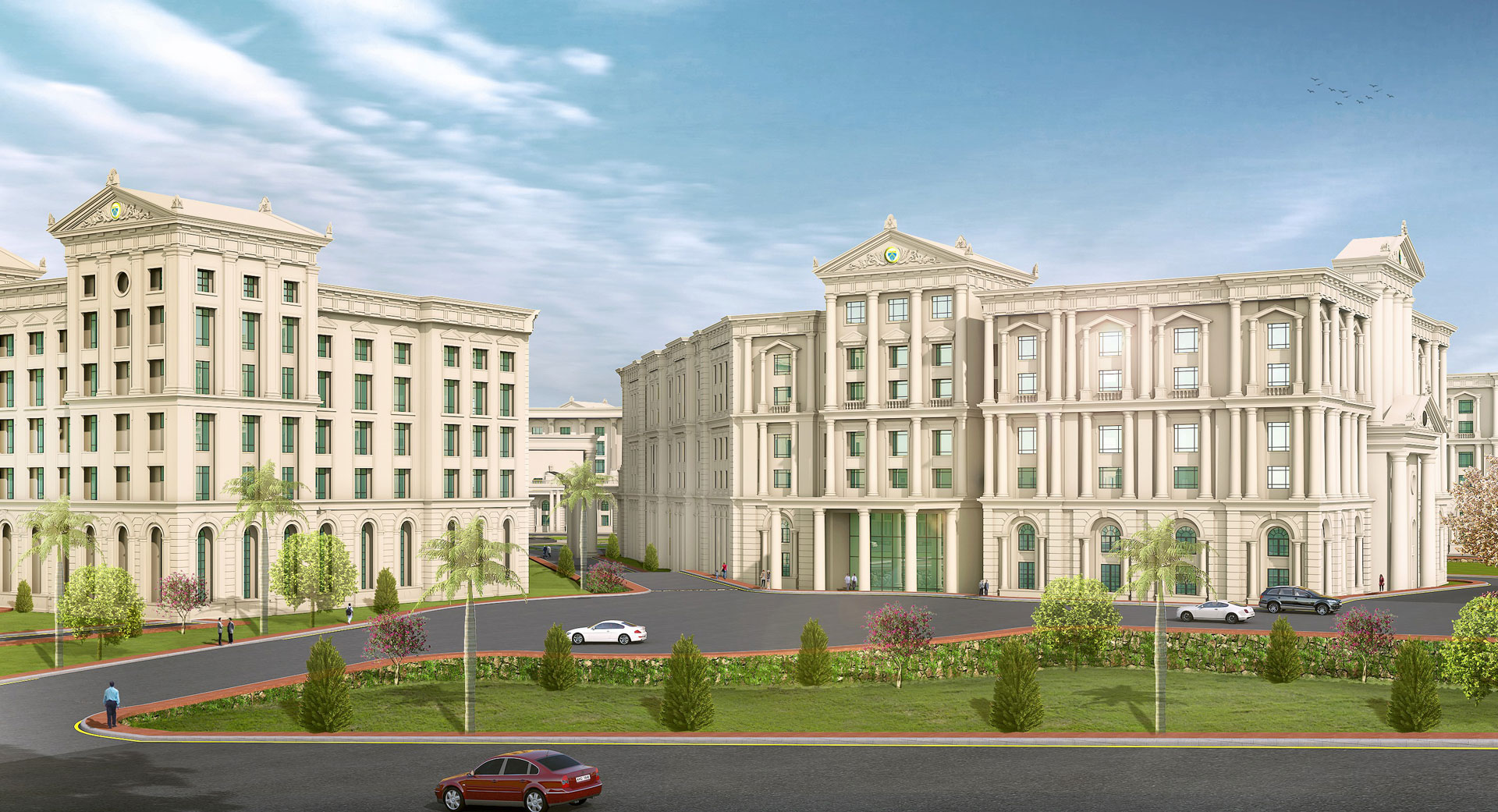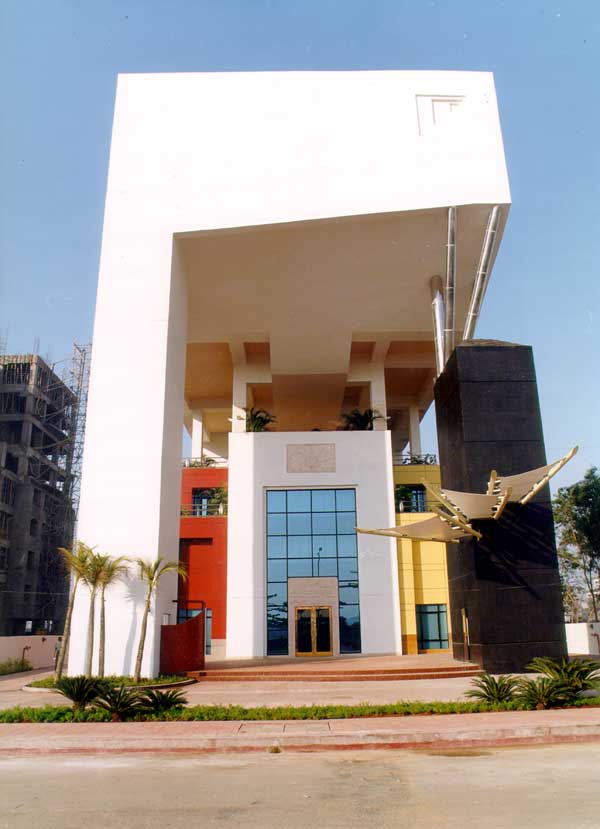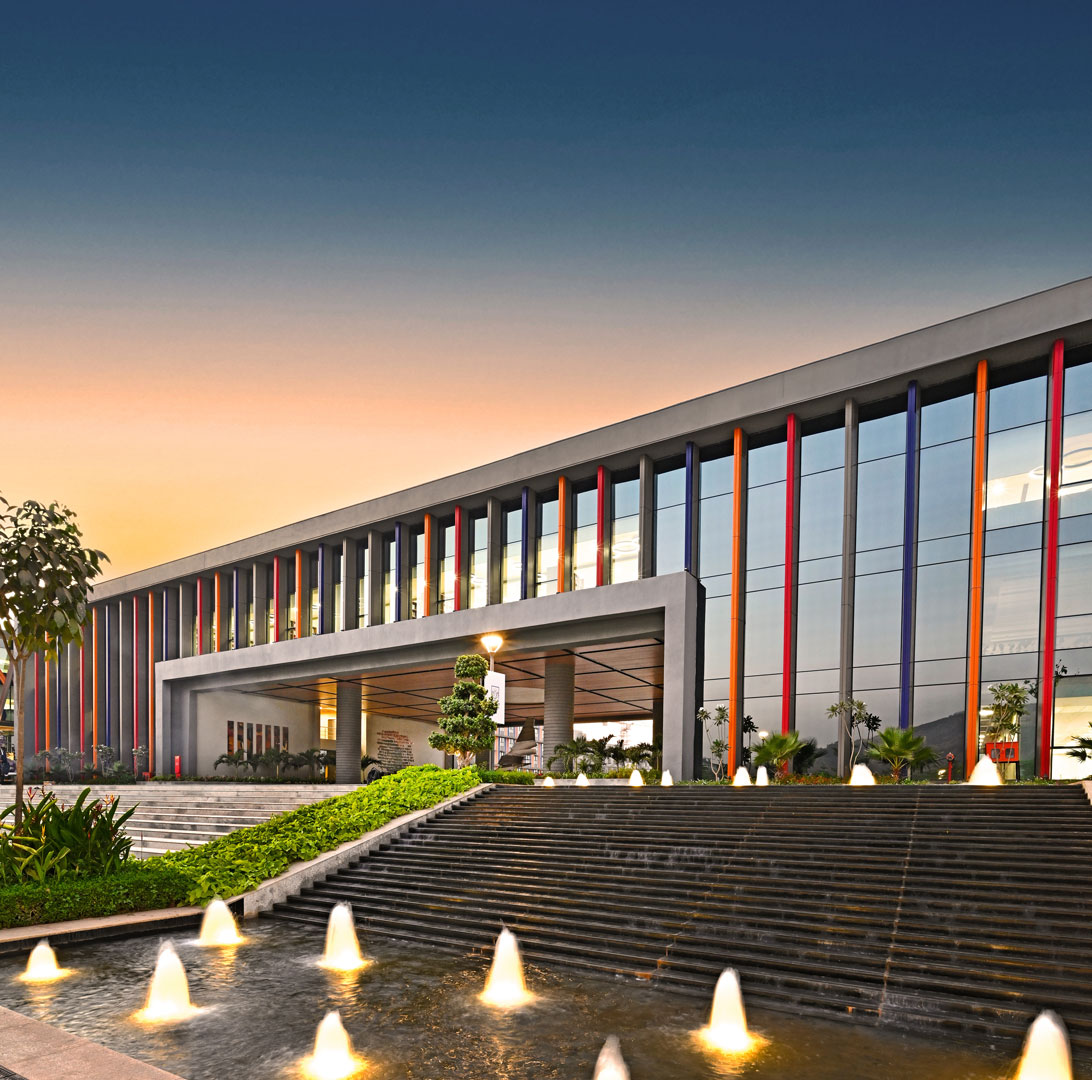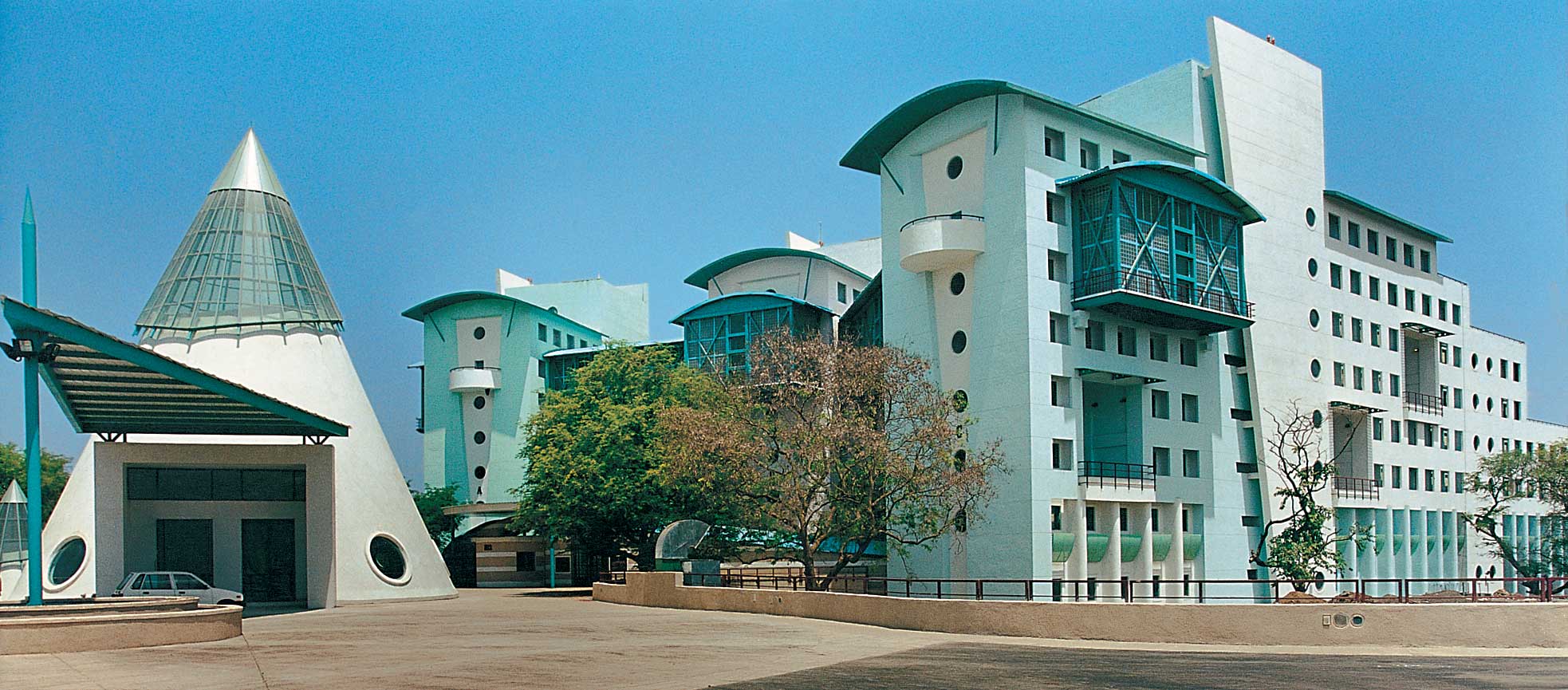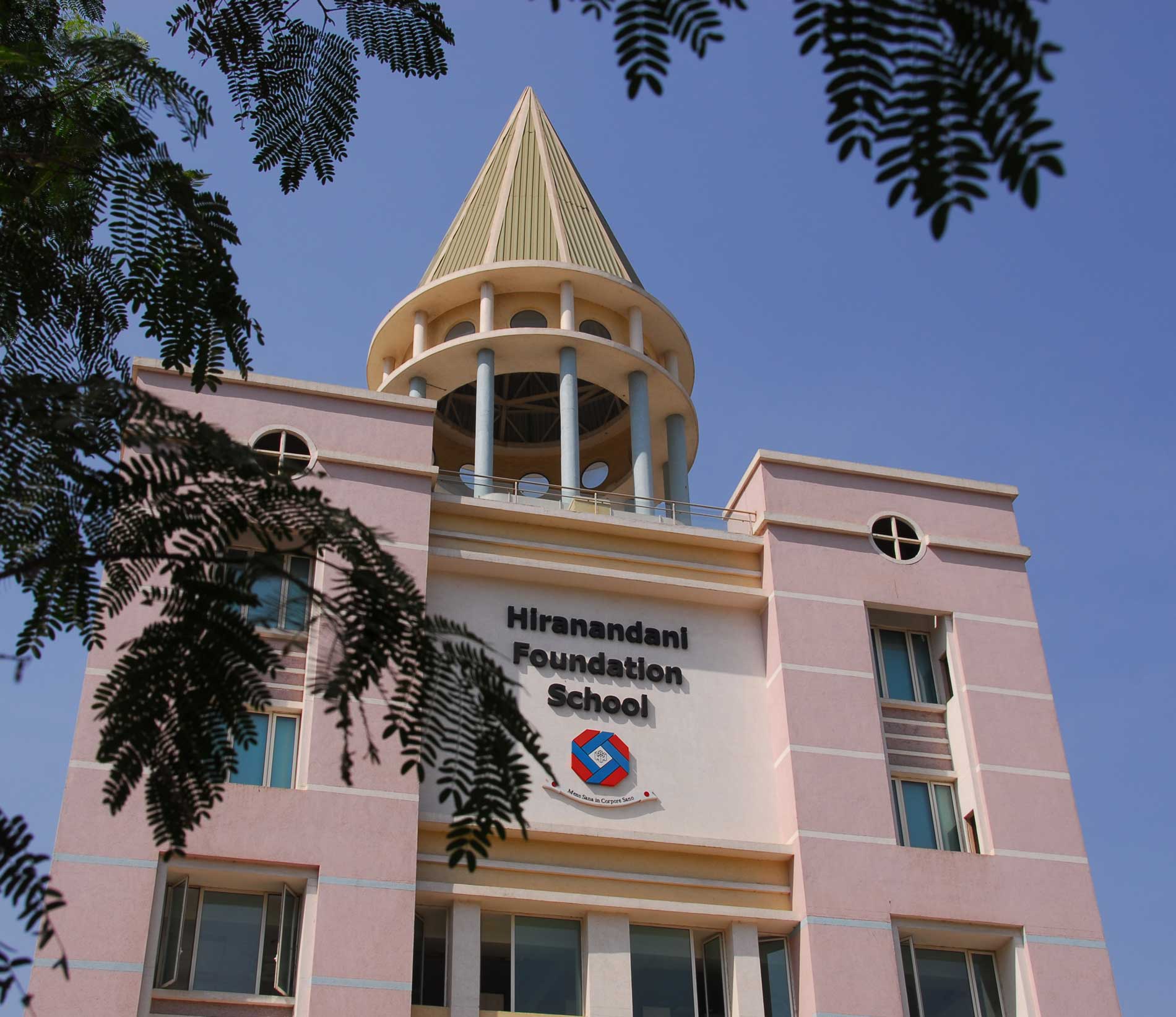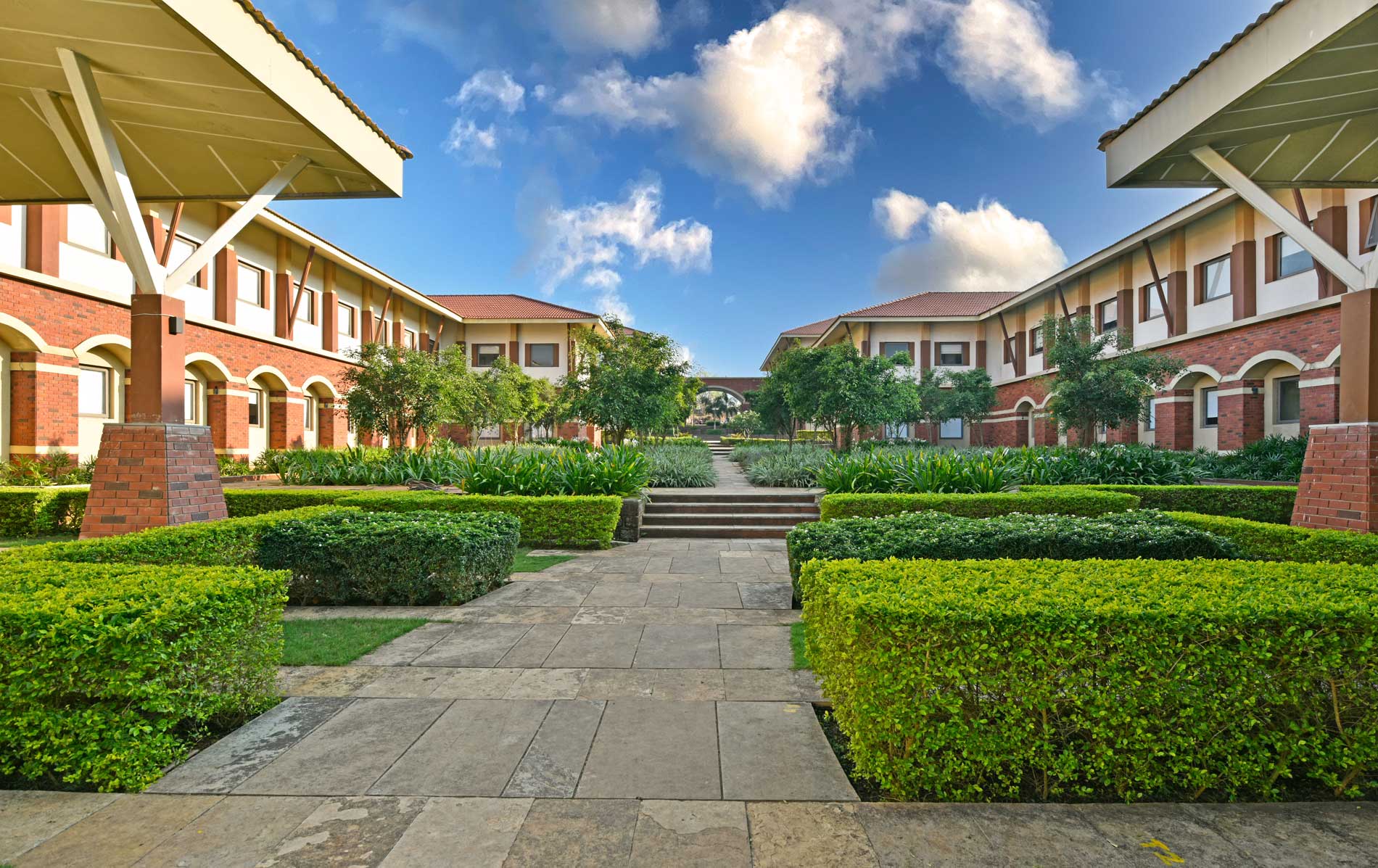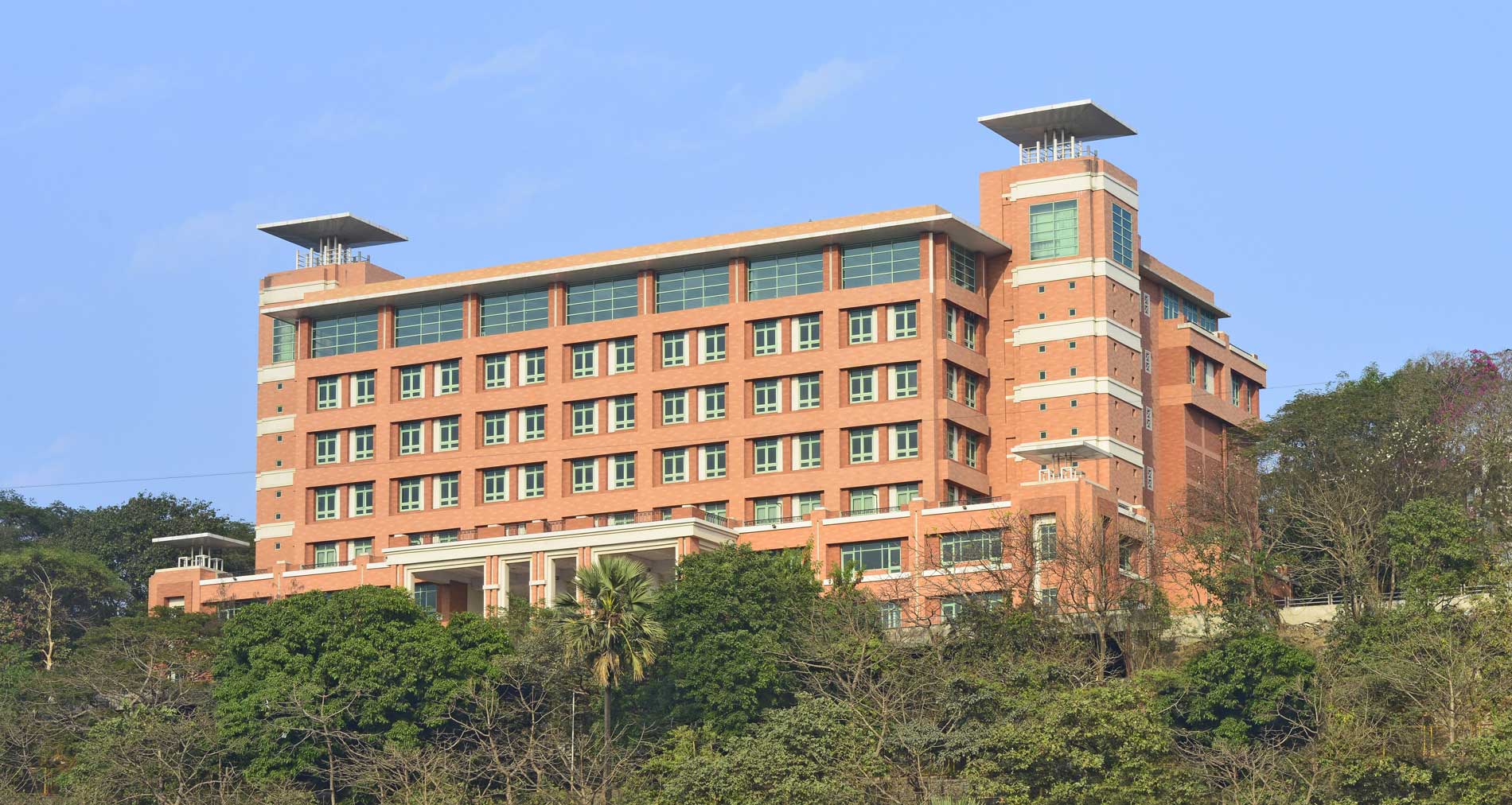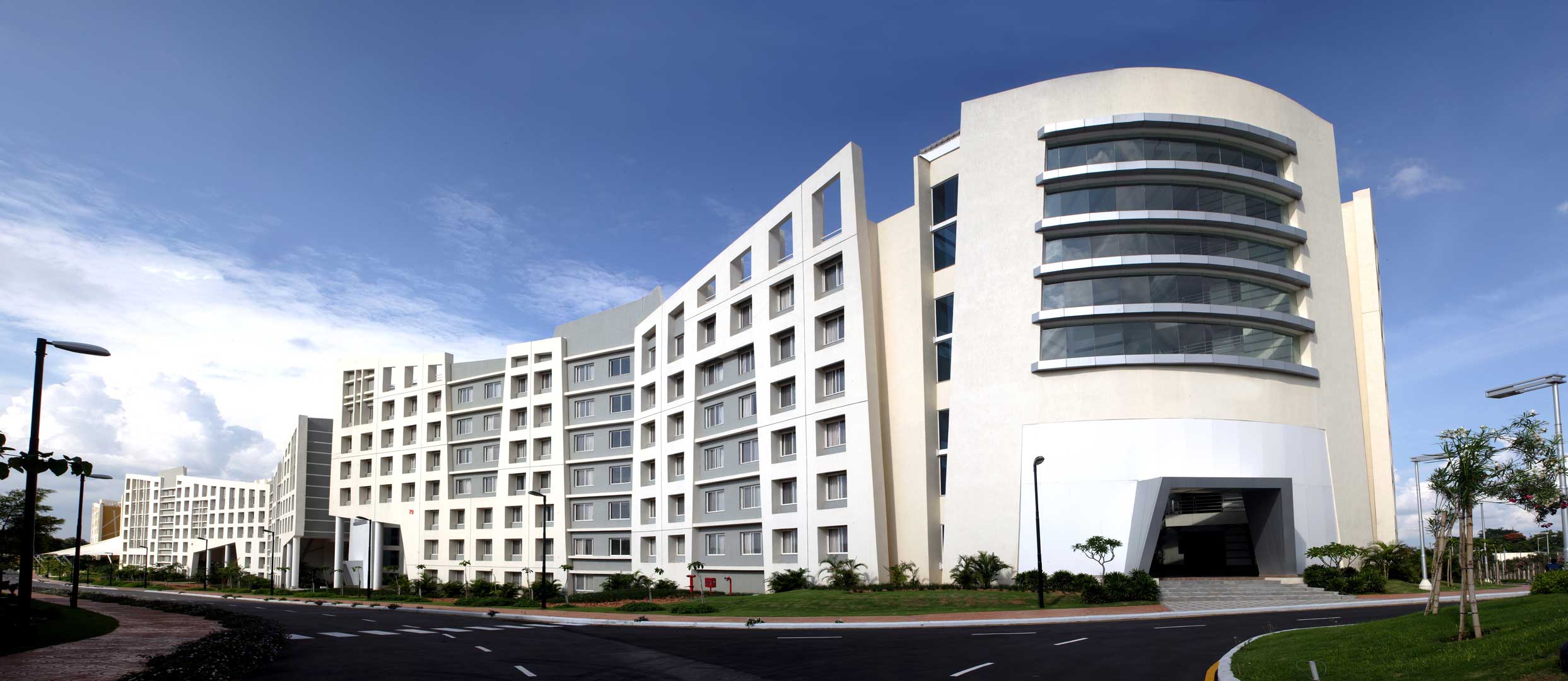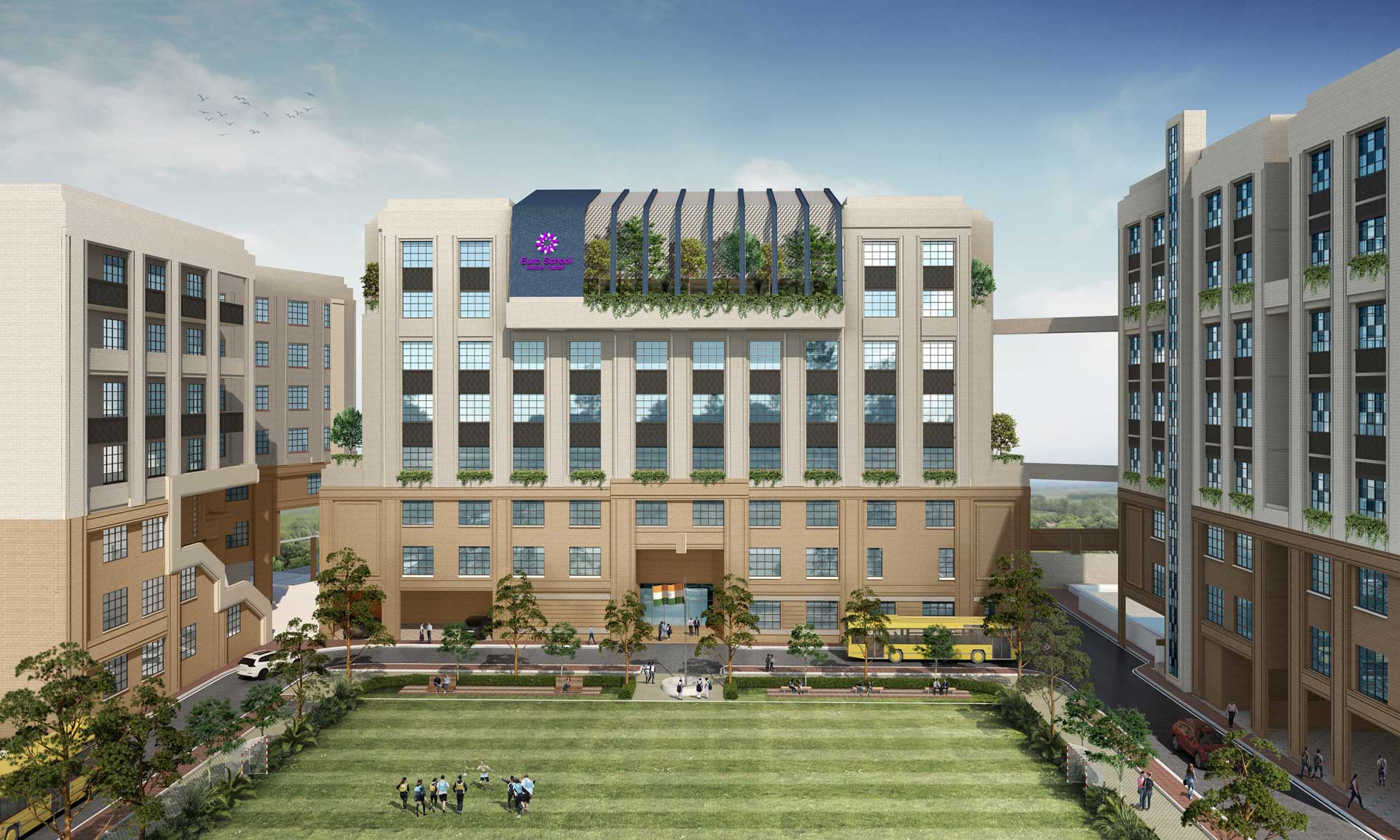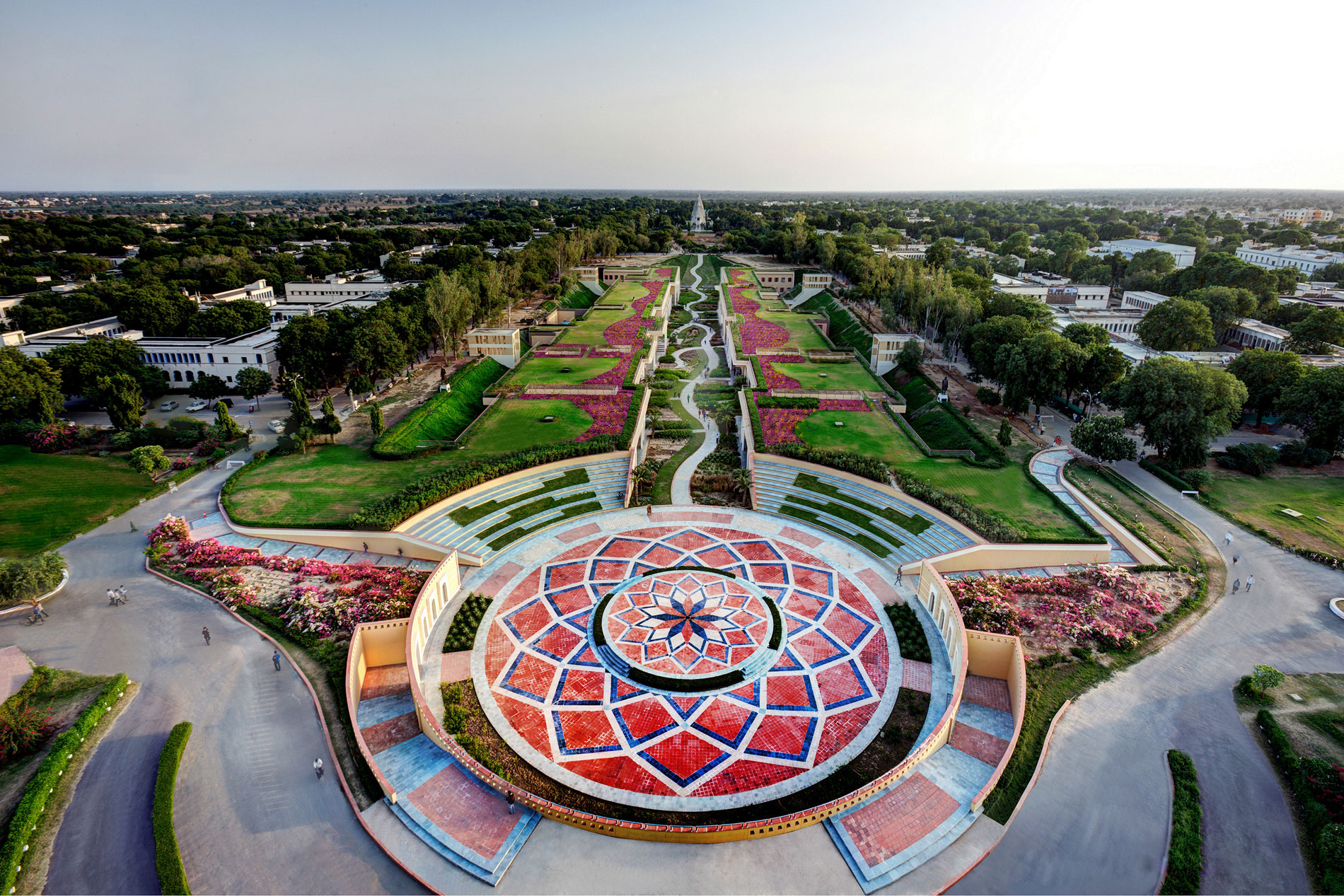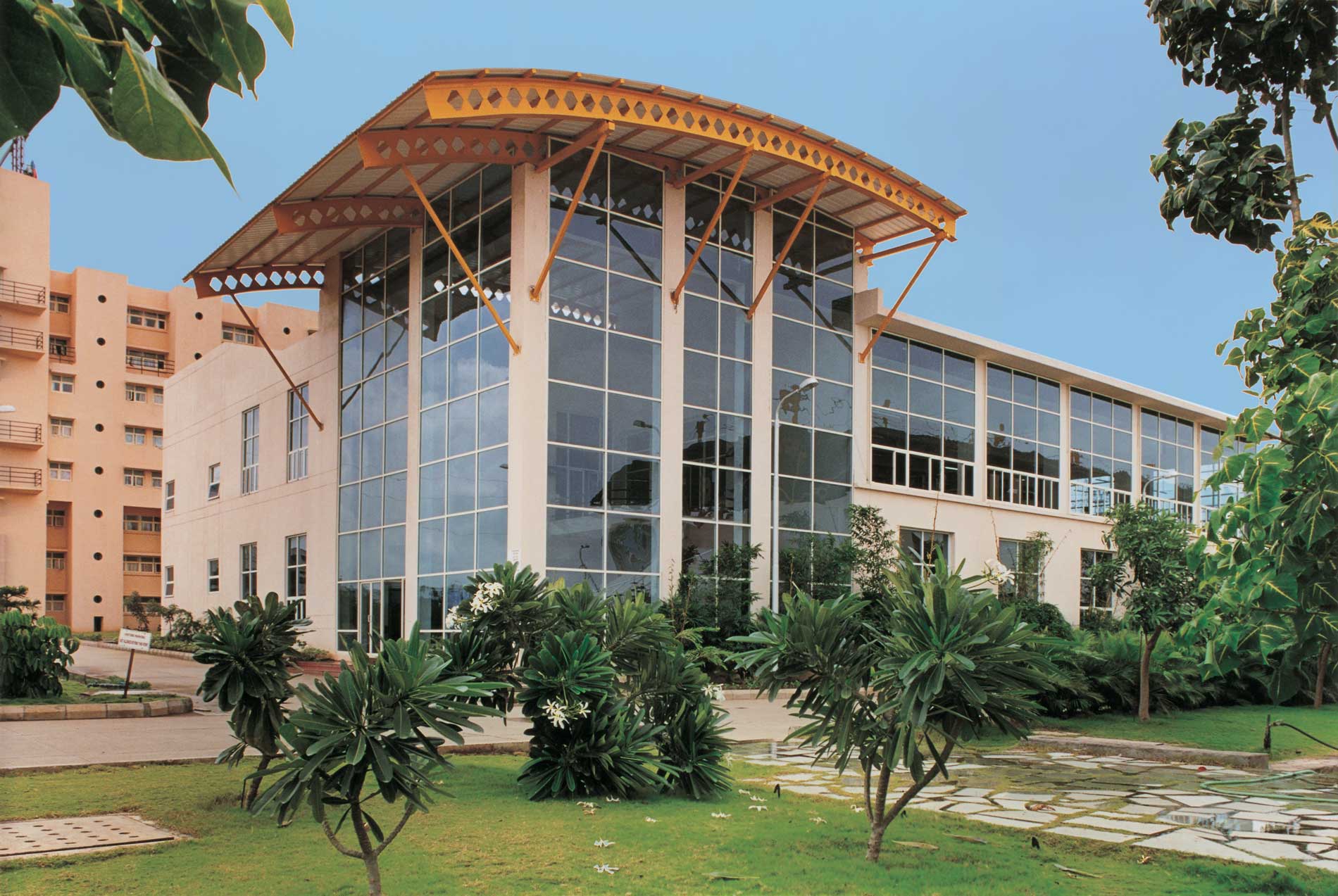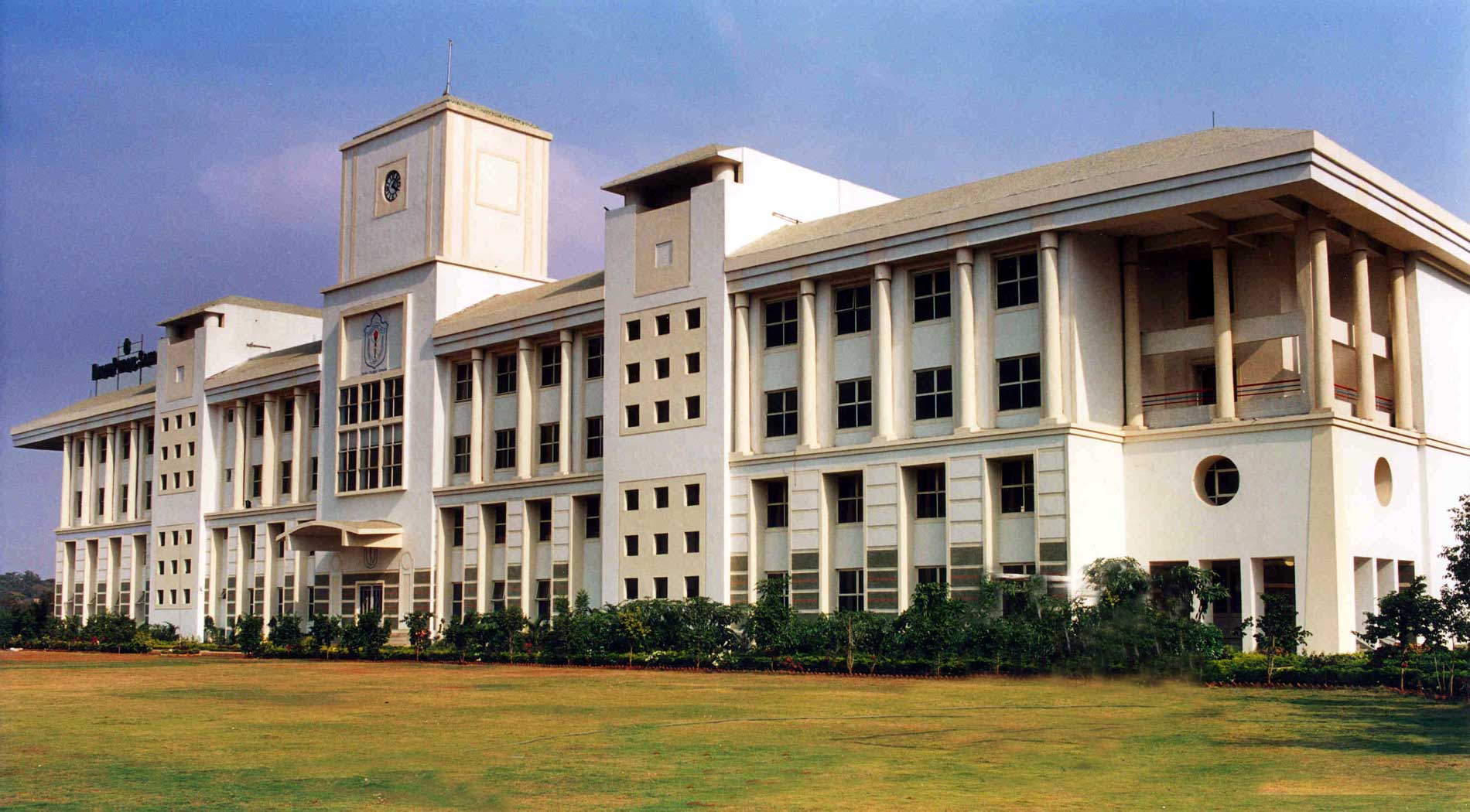

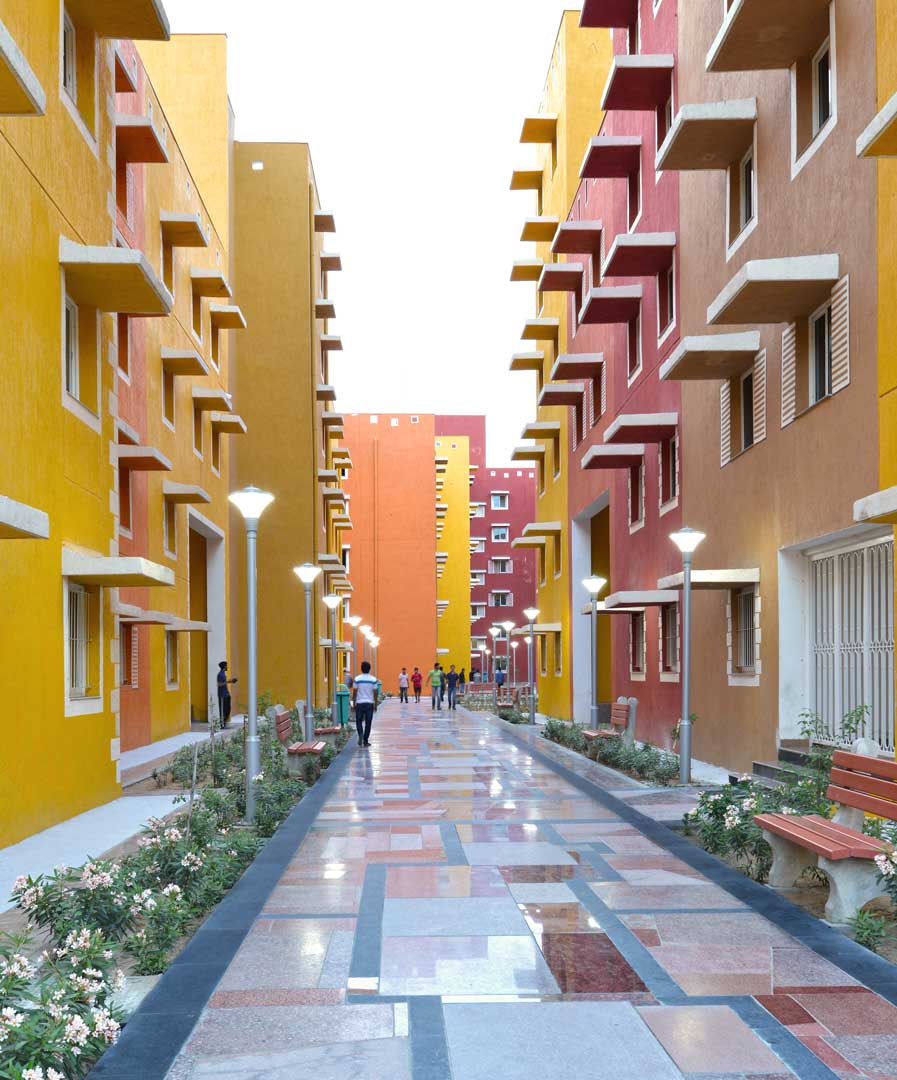
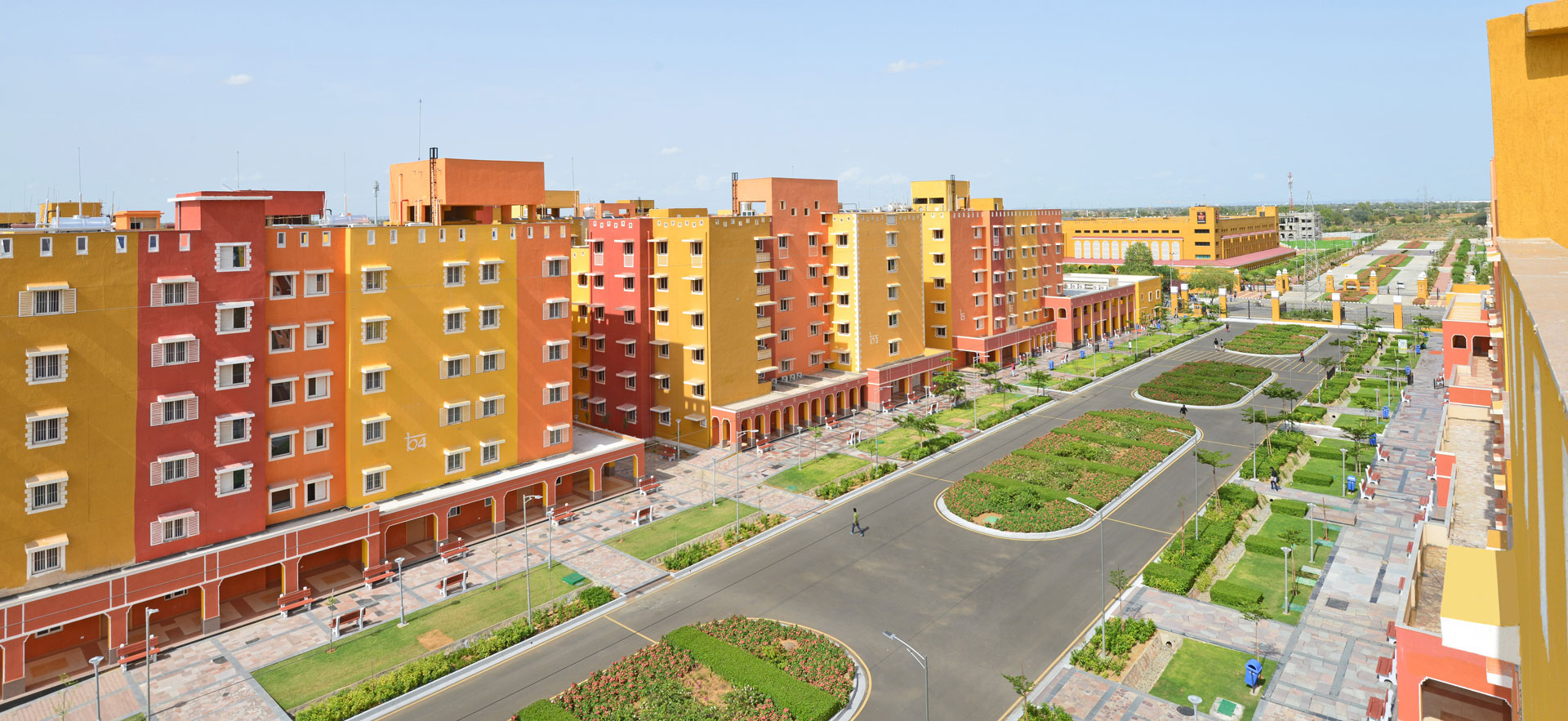
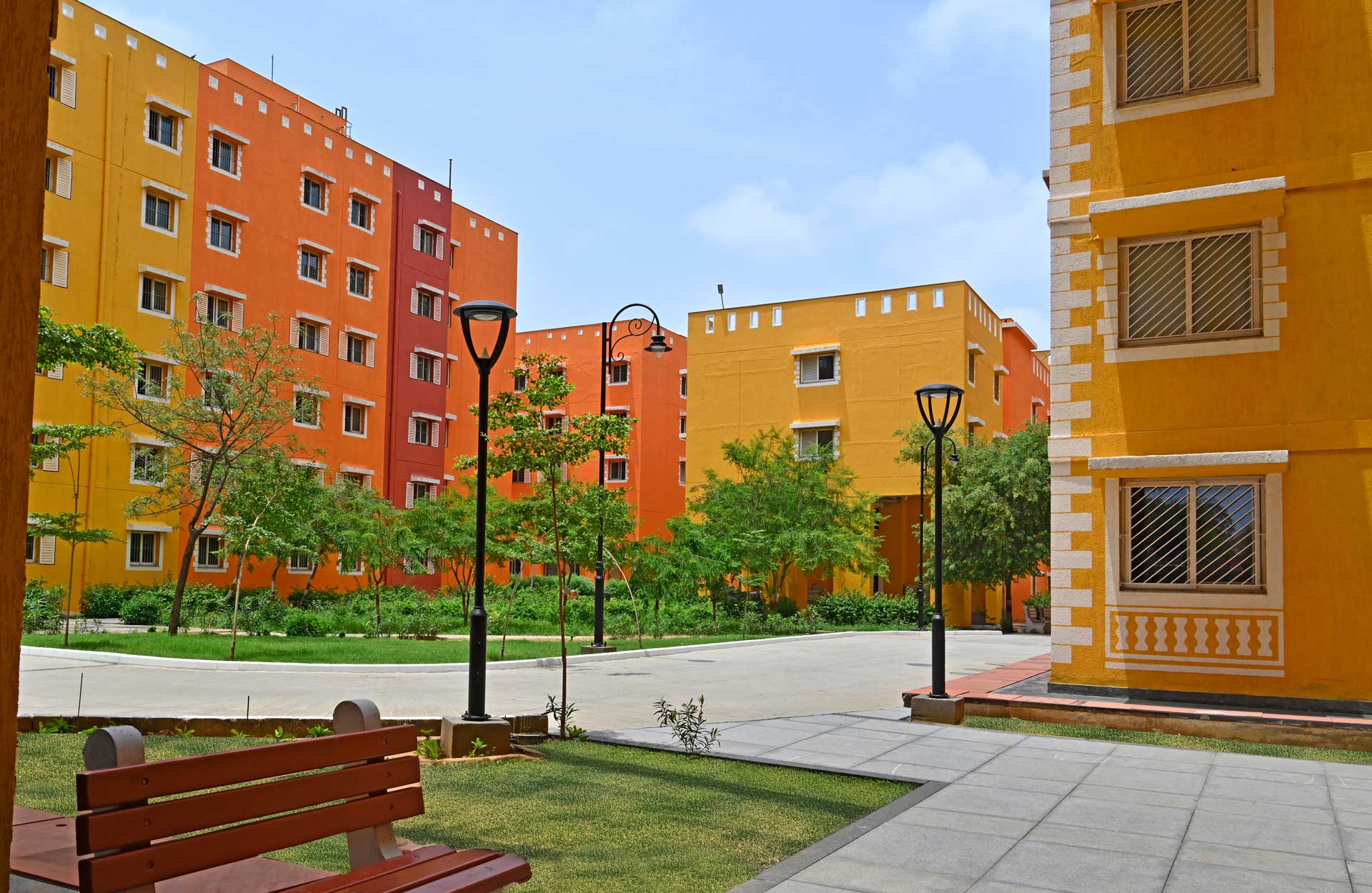
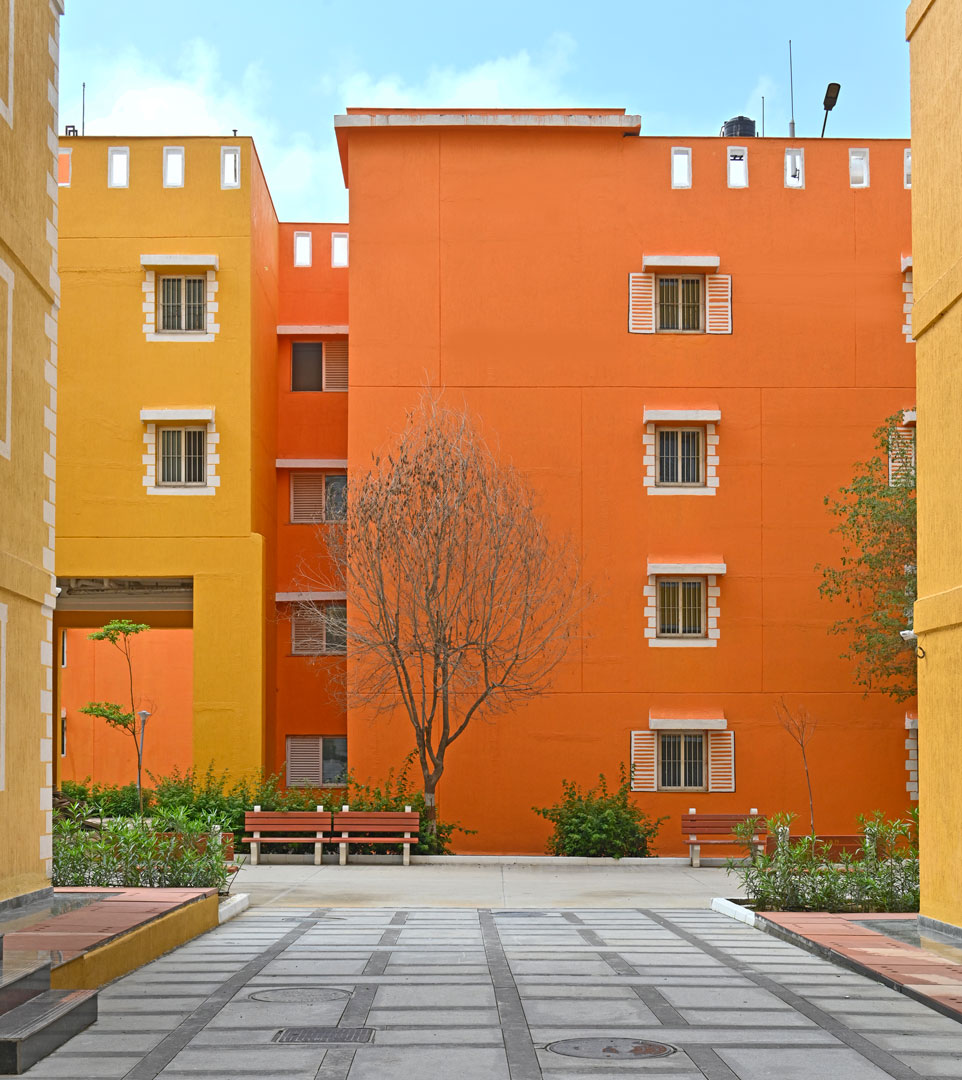
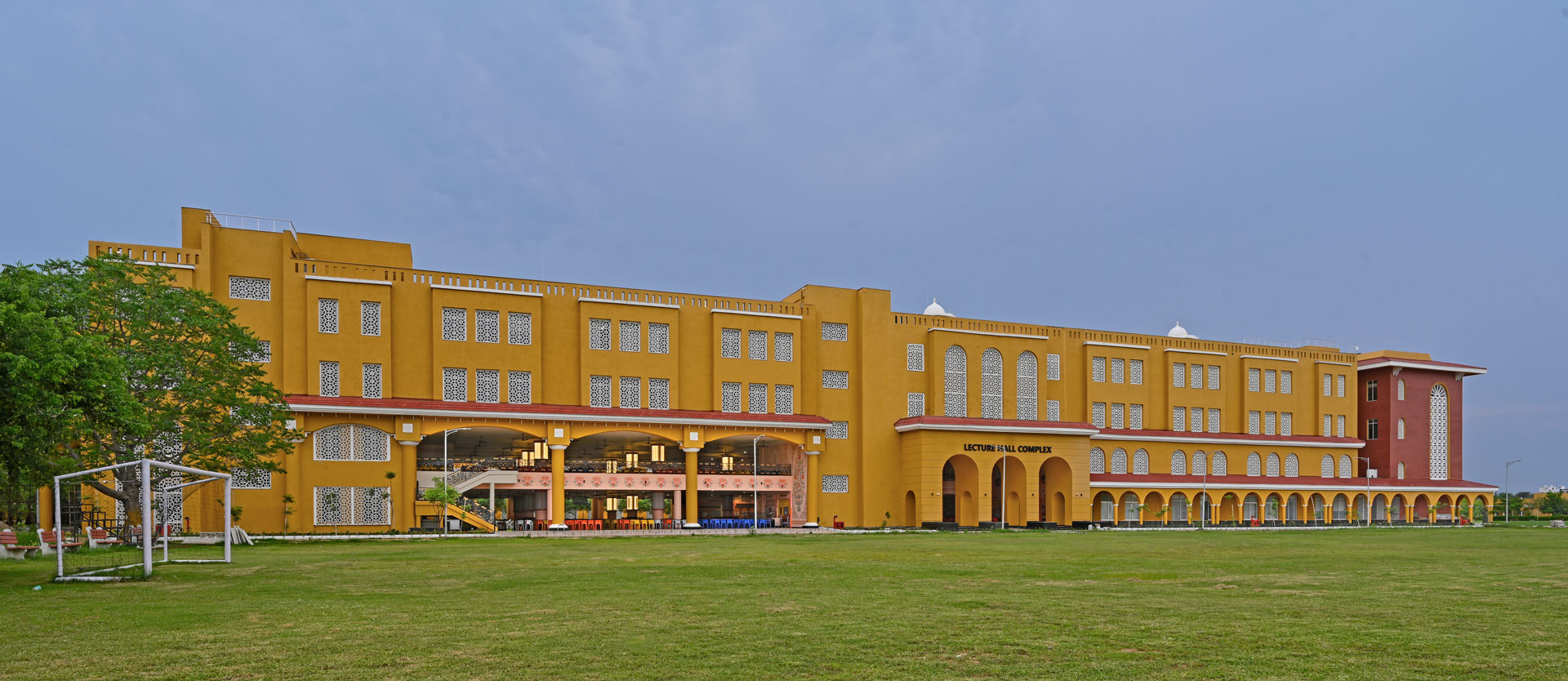
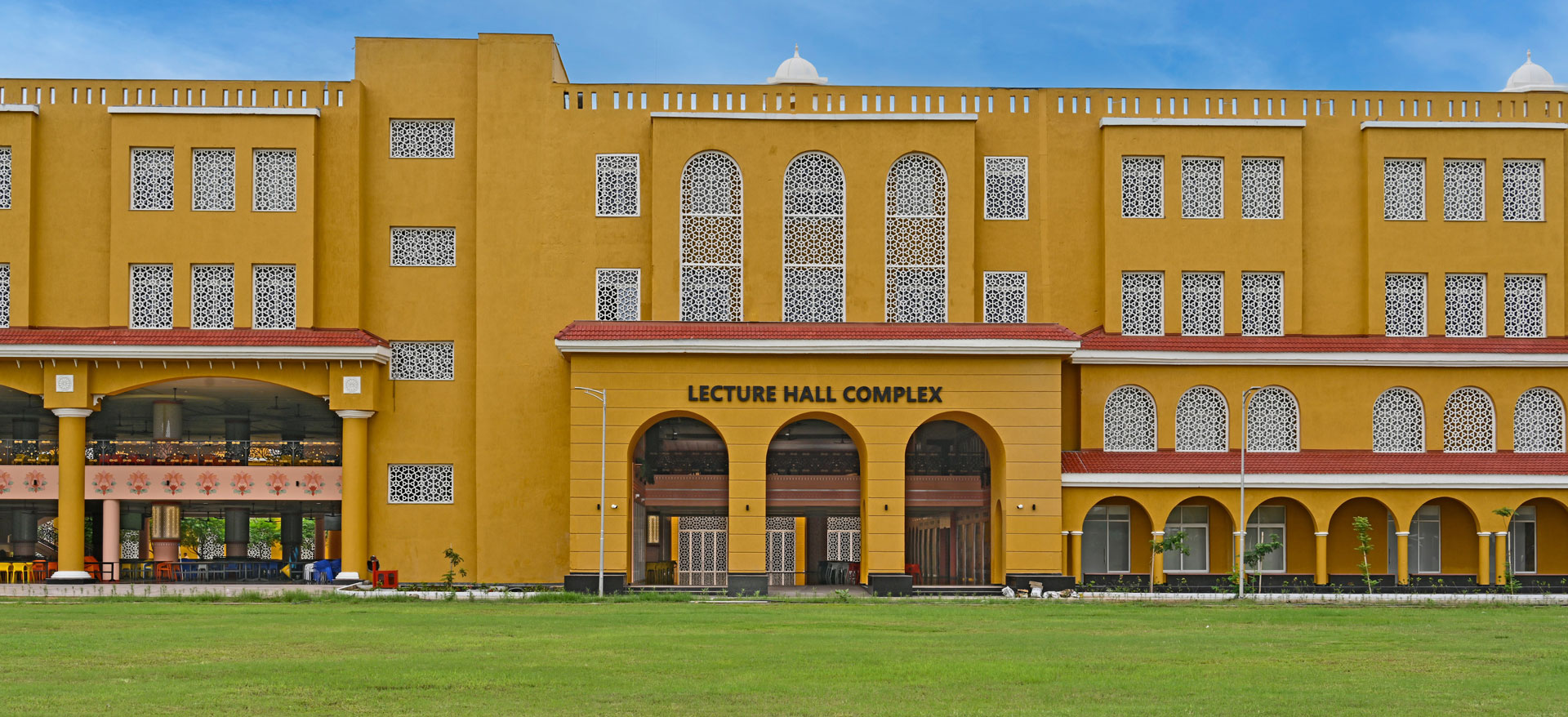
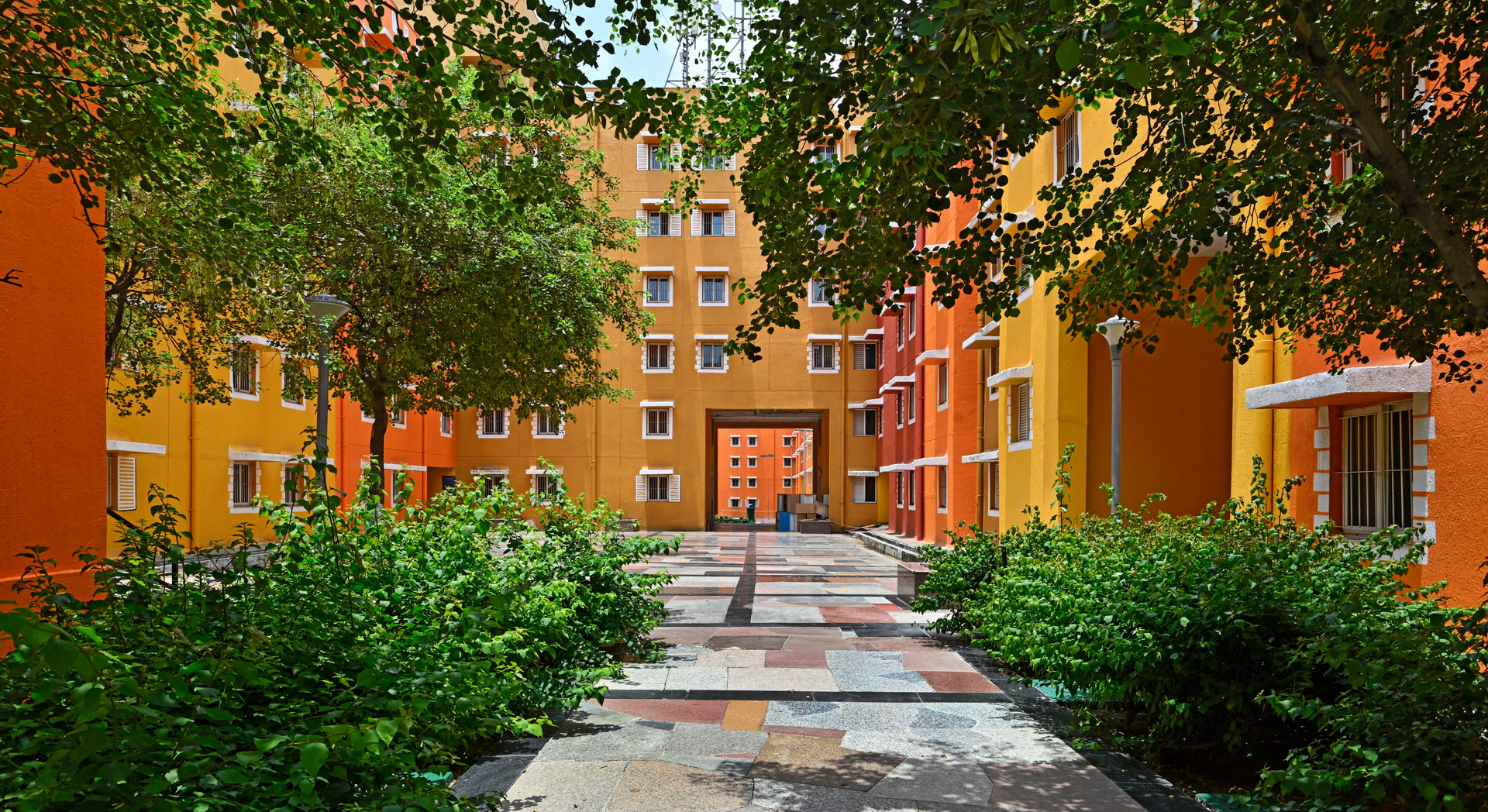
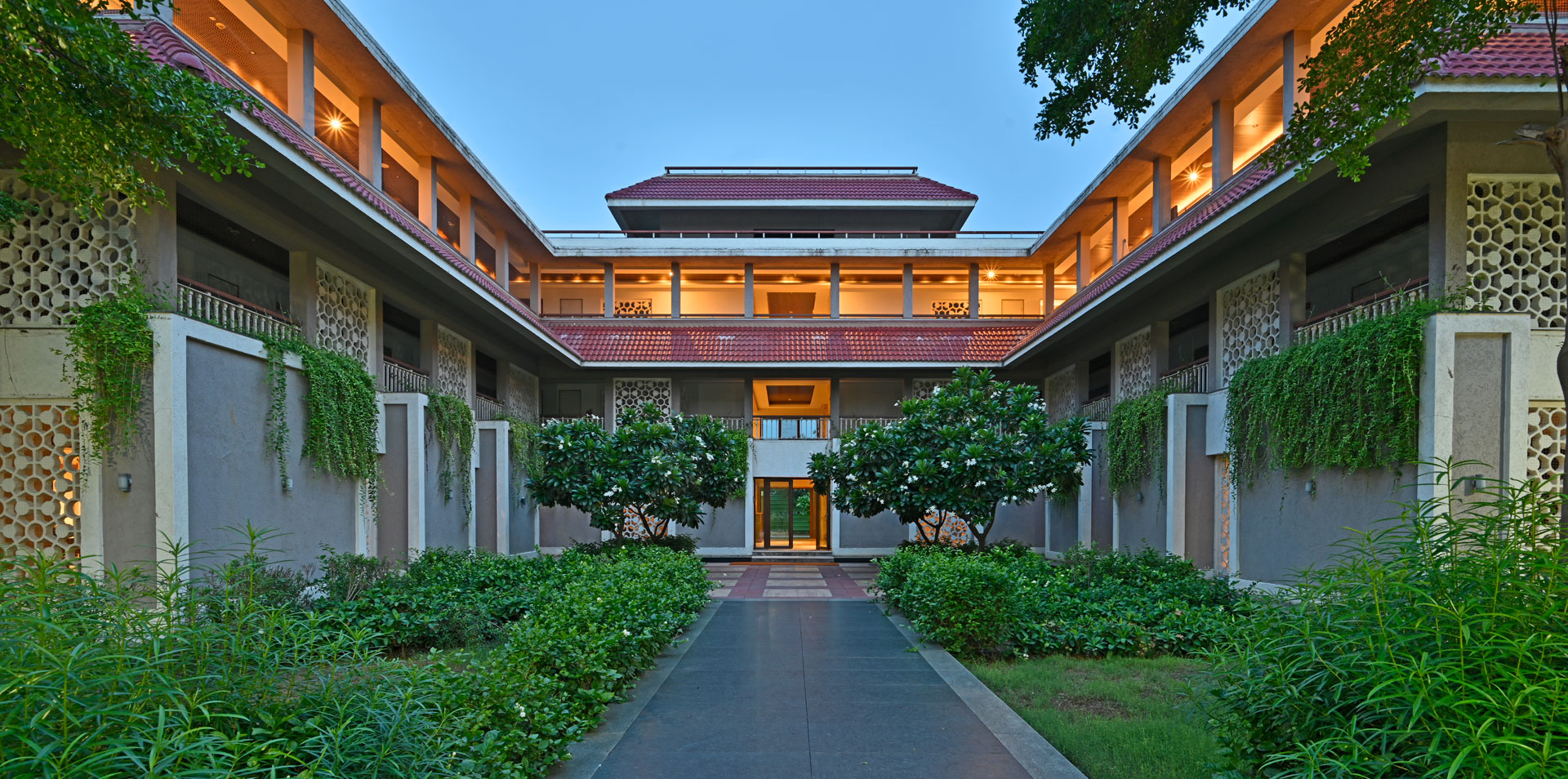
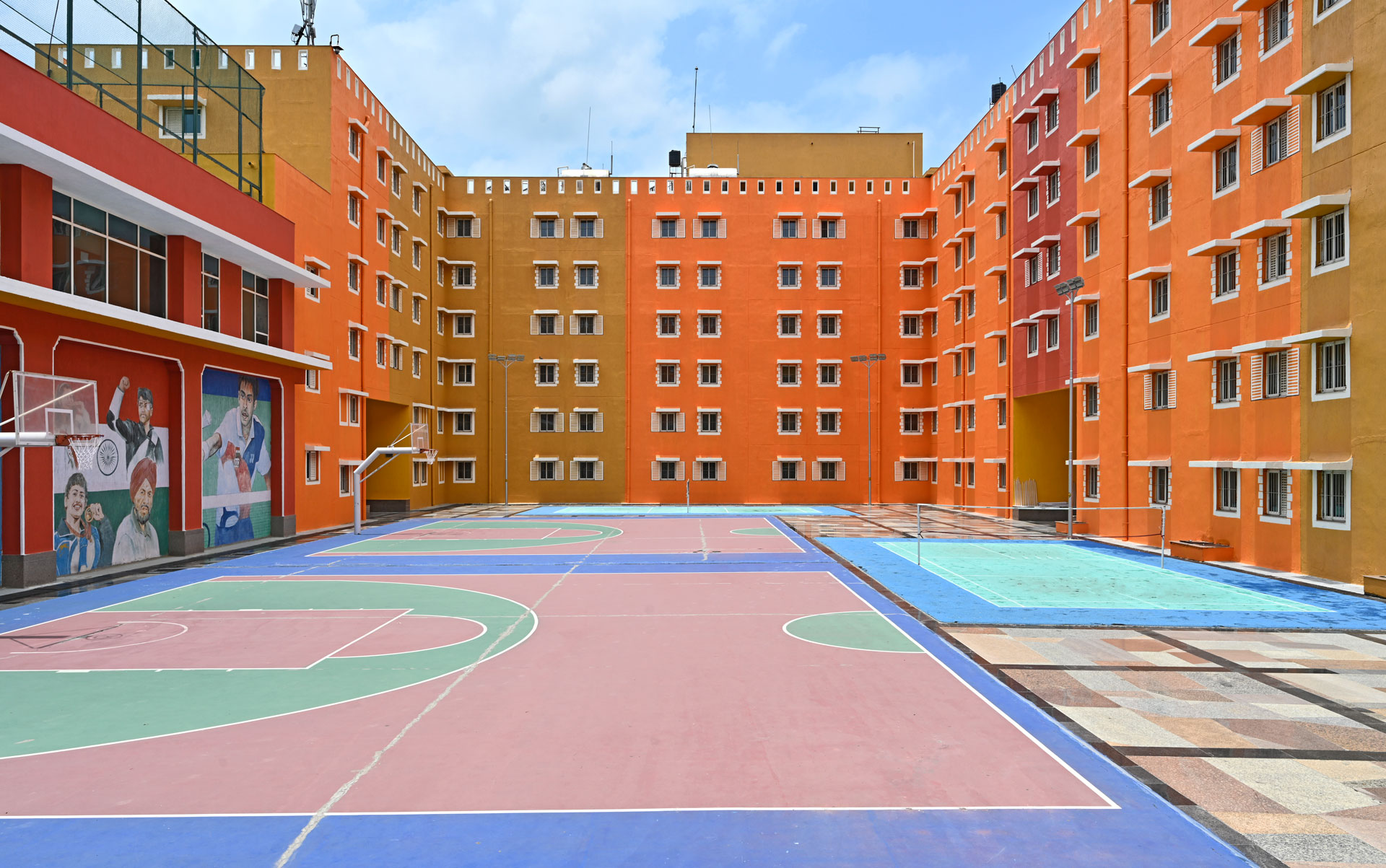
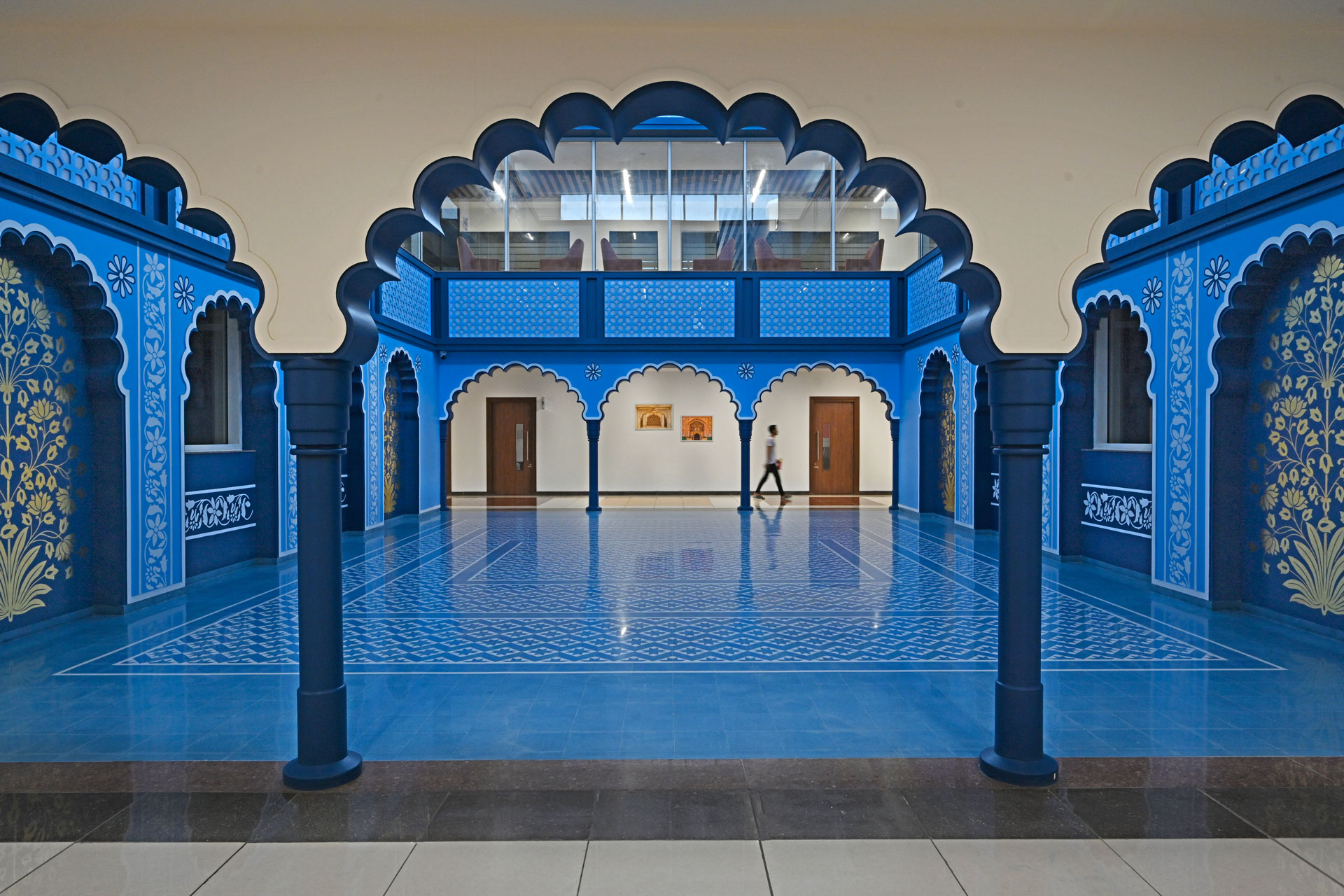
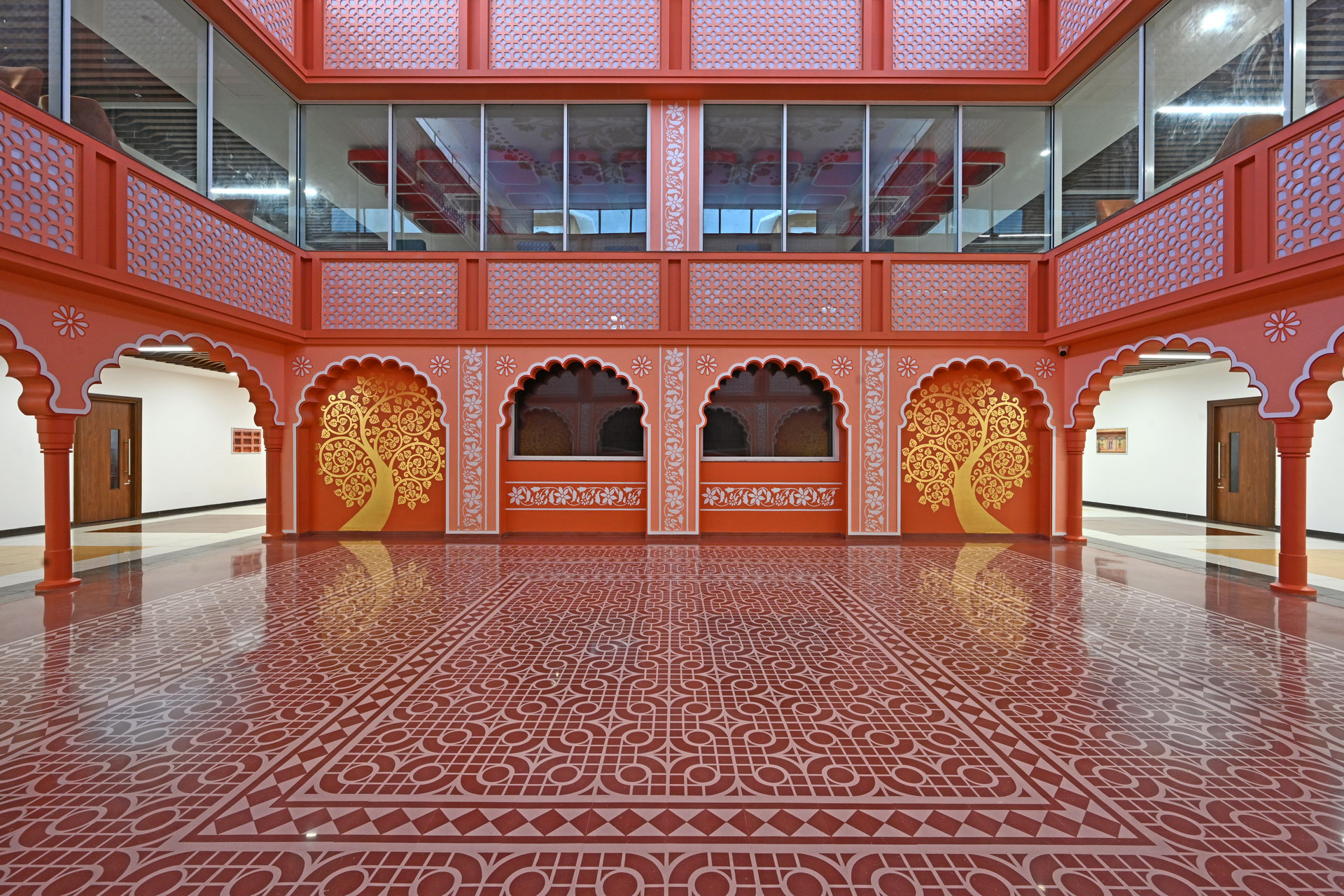
Manipal University, Jaipur is located near Dehmi Kalan village, Tehsil Sanganer, Jaipur district. The land parcel for the entire University development project is approximately 185 acres and the plot is naturally divided by the NH8 Express Highway (Jaipur-Ajmer Highway) into 3 parcels. This division resulted in the separation of the Academic and Residential areas which are envisioned to be connected by a pedestrian underpass allowing the seamless movement of students on foot or bicycle from their rooms to the classroom. The sites are further divided into two parts due to the presence of a High Tension Electrical Line which has been promised to be made underground by the Rajasthan Government. Up to such time the HT Line creates a natural divide which we have embraced as a central axis that serves as a major connection as well as provides for open spaces to the campus. On the University side, The New Academic Block (NAB) is placed along this central axis. The design appears to capture a glimpse of the bygone era by incorporating the features such as the Rajasthan Courtyard, bright coloured facades, double wall construction, jali work, etc. However each of these features is provided with the very specific purpose of making a world class Platinum rated campus and building. The colour of the buildings resonate the colour of the sand, the courtyard helps shading; the double walls, chajjas and Jali work differ for each of the North, South, East and West facades designed by carrying out detailed studies of sun path, wind rose, etc. The residential side of the campus sits on a site of 56 acres and it comprises of approximately 3000 student rooms, an 1800 capacity triple cover food court, faculty housing, security block, industrial laundry, high side services and several areas of recreation. Per the demands of the university and students’ parents, the girls and boys hostels are separated, by creating a grand avenue like the Las Ramblas of Barcelona. The driving idea behind the design was to create a thriving community based on the concept of “The Medieval Maze” consisting of shaded streets and corridors, narrow deep and shaded courtyards and pergolas for shaded circulation. Thus the design has manifested itself with interlocking streets and courts, narrow skewed views, compact blocks, compressed movements. The entire campus reverberates the strong quality of a holistic and integrated community through its architecture. The master plan, ground level experience and student feedback are testament to this. At the start of the project the land was filled with “kikad” trees which were removed and deposited with the Forest Department. The campus is now landscaped with several hardy species like hardy plants, white and pink Bougainville, Euphobia Milli red and yellow Alamonda.
Loading projects…




For work enquiries info@hcontractor.com
For press enquiries exec@hcontractor.com
For careers see current listings

Architect Hafeez Contractor
1st floor, B-29, Sonawala Building
Nyaymurti G N Vaidya Road
Fort, Mumbai, Maharashtra – 400 001
(+91) 22 2266 1920
1st floor, B-29, Sonawala Building
Nyaymurti G N Vaidya Road
Fort, Mumbai, Maharashtra – 400 001
(+91) 22 2266 1920